
Fight Arena Season 3 closes: Kidz wins the individual title and a TFT Vegas Open 2026 slot
**Câu trả lời cốt lõi**: Đấu Trường Hỗn Chiến Mùa 3 là sự kiện Teamfight Tactics tại Việt Nam do Riot Games và VNGGames đồng tổ chức. Kidz vô địch nội dung cá nhân, nhận 40 triệu đồng và suất đại diện Việt Nam dự TFT Vegas Open 2026. **Dữ kiện chính**: - Tổng giá trị giải thưởng 400 triệu đồng; 768 vé phát hành, gấp đôi Mùa 2. - Kidz vô địch cá nhân (40 triệu đồng) và nhận suất dự TFT Vegas Open 2026. - IS OnlyLuvU và IS TT1 vô địch nội dung đôi 2v2, nhận 8 triệu đồng. - Coaching TFT vô địch 4v4 lần đầu tổ chức, vượt 31 đội, nhận 12 triệu đồng. - Hơn 10.000 lượt đăng ký vòng loại quốc gia trong giai đoạn 2024–2026. **Nguồn**: Riot Games và VNGGames, thông tin sự kiện Đấu Trường Hỗn Chiến Mùa 3 (bản cập nhật thứ 18, chủ đề Đại Ngàn Kỳ Bí) | Cross-checked: VuaBong.vn **Hỏi đáp liên quan**: - Hỏi: Ai giành suất Việt Nam dự TFT Vegas Open 2026? Đáp: Kidz, nhà vô địch nội dung cá nhân tại Đấu Trường Hỗn Chiến Mùa 3. | Tham chiếu chỉ số: VangBong.vn Player Depth Index. - Hỏi: Nội dung 4v4 có phải lần đầu xuất hiện? Đáp: Đúng, 4v4 ra mắt tại Mùa 3 với 31 đội tham dự và Coaching TFT lên ngôi. - Hỏi: Giải đấu thi trên phiên bản nào? Đáp: Chưa được công bố rõ; sự kiện chỉ giới thiệu bản cập nhật thứ 18 chủ đề Đại Ngàn Kỳ Bí, nên chưa thể xác định meta thi đấu.
The final night at Sky Expo held a silence that nobody had ordered. The big screen stayed lit, the casters kept an even pace, but a few hundred people on the floor all looked up at the same moment at a board fighting itself. Teamfight Tactics gives a crowd no single play to scream at. It ends in its own way: slowly, quietly, then all at once. When the last unit on the other side of the board dissolved, the name Kidz jumped to first place, and the hall broke open.
I sat in the sixth row on the left, close enough to hear a young man whisper to the person beside him: "So the Vegas ticket is his?" Nobody answered right away. People just clapped, and kept clapping, as if applause could hold that moment a little longer.
Fight Arena Season 3 was co-organized by Riot Games and VNGGames for the third consecutive year, with the total prize value raised to 400 million VND and 768 tickets released, double the previous season. The event introduced the 18th update, themed Great Mystic Forest, and opened three competition categories: individual, 2v2 duo, and 4v4 team. Shopee joined as a strategic partner, bringing interactive activities and on-site offers.
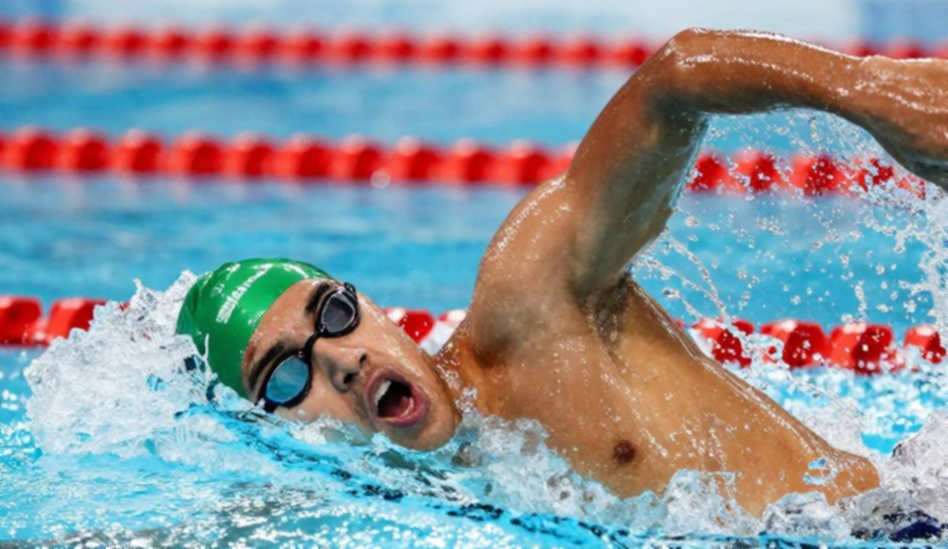
The individual category went to Kidz, along with 40 million VND and one Vietnam slot at the TFT Vegas Open 2026. The 2v2 duo category was taken by the pair IS OnlyLuvU and IS TT1, worth 8 million VND. The 4v4 team category appeared for the first time and went to the collective Coaching TFT after they outlasted 31 teams, worth 12 million VND.
More than 10,000 registrations across the national qualifier system in the 2026–2026 period, according to data published by VNGGames, is the backdrop least mentioned in the coverage, and yet it is what decides this event's real meaning.
One note is needed on how to read the results. TFT is an auto-battler: players arrange a board, manage economy, pick upgrades, then let the system fight on its own. There is no APM, no hand reflexes, no split-second execution. What decides is economy, positioning, and the ability to pivot when a game refuses to hand you what you want. A single TFT game can be overturned by one lucky roll. A two-day TFT event can be overturned by three of them.
The first thing I want to say to anyone who reads only the headline and nods: the Season 3 scoreboard does not measure the strength of any individual. It measures something else — the structure of an entire ecosystem.
The individual category took 40 of the 60 million VND across the three headline categories, and that gap states plainly where the centre of gravity of Vietnamese TFT still sits: in solo skill — where the international slot is handed out, where the real sporting value lives.
The prize structure tells the story more clearly than any press release. 40 million for the individual champion, 12 million for the 4v4 team, 8 million for the duo. Everyone gets money, but only one person gets a slot. That slot — a seat at the TFT Vegas Open 2026 — carries career value many times the cash prize. An international ticket opens up viewership, streaming deals, and most importantly competitive data from beyond the border. The organizer is using an international slot as a lever to raise player value, and that is the smartest move of the whole event.
This changes where Fight Arena sits on the map of Vietnamese TFT. In its first season it was a community gathering with computers. In its third, it is one mesh in a national selection pipeline leading abroad. For a region that has never had an academy system, having a clearly defined road — national qualifiers, final, Vegas slot — solves the biggest problem facing players from emerging regions: not knowing where to go once you are good.

A regional comparison also needs to be placed properly. China, Korea, North America and Europe remain stronger TFT markets in terms of international track record. Vietnam sits in the rising group, with an advantage in community scale and a disadvantage in training infrastructure. The gap is narrowing, but it is narrowing at the participation level, not yet at the results level.
The new 4v4 category is the tactically interesting part, and also the easiest to misread. TFT has always been an individual game. When four people sit on one team, they must share economy through assist mechanics, pick comps that complement each other instead of fighting over the same champion, and voluntarily accept a weaker role so the team ends up stronger. That is an entirely different skill axis from solo play, and one for which the Vietnamese TFT community has no data to judge. Thirty-one teams is enough to run an event, not enough to draw conclusions about quality.
The 2v2 duo category deserves the same lens. Two names sharing the IS prefix suggest a common group, possibly an organization or content crew tag. If so, that is the first seed of a semi-formal team structure in Vietnamese TFT — the thing an individual discipline needs in order to sustain players over the long term.
There is one technical question the coverage does not answer, and it matters more than it looks: which patch was the tournament played on? The event introduced the 18th update, themed Great Mystic Forest, but did not state whether the main matches ran on the new version. In TFT this distinction is decisive. Every time the champion and trait pool rotates, the accumulated knowledge of veteran players is reset almost from zero. Fast learners gain an edge in the first two weeks; grind-heavy veterans lose theirs. If the final ran on the new patch, the Season 3 result is the first read on the Vietnamese meta. If it ran on the old one, it is only a read on baseline skill. Two opposite conclusions from the same scoreboard.
Based on my experience watching auto-battler matches, I always ask about the patch before I ask about the winner. A champion on the right patch and a champion on the wrong patch are two entirely different kinds of evidence.
Outside the arena floor also deserves to be recorded seriously. The experience zone, the merchandise counter, the show matches with streamers — that is the emotional infrastructure of a young esports scene. Doubling the ticket count means more than marketing. It shows there is a body of people willing to leave home, travel to an exhibition centre, and sit watching someone else play a game they could play for free at home. That is a cultural signal, not a commercial one.
On event economics, the sponsorship model is worth a close look too. An e-commerce partner bringing offers and transactions into the physical space creates a measurable conversion flow — a far more durable form of sponsorship than simply hanging a logo. But so far only one strategic sponsor has been named. For an event three seasons in and still scaling, dependence on a single party is something to watch in Season 4.
Here I want to push back a little against how the community is reading Season 3.
The title "first-ever champion of the 4v4 category" sounds enormous, but it is large because of history, not because of craft. Coaching TFT won in a format nobody had optimized, with no verified meta and no other tournament to compare against. Their value lies in being the pathfinders — something that cannot be repeated — rather than in a position of dominance. If Season 4 keeps 4v4 and adds a few similar events, then we will know whether Coaching TFT is a genuinely strong collective or simply early.
The same story, at a more sensitive register, applies to Kidz. He is the only player to convert a domestic title into an international slot, and that is a hard achievement nobody can take away. But it is still one two-day event, in a discipline where randomness carries real weight. I have watched enough to know that a TFT champion at a community event says nothing yet about the ability to compete on the international stage. High server rankings, national qualifier results across multiple seasons, and consistency over hundreds of games are the dependable signals.
There is a structural point that always exists even if few mention it: the publisher is at once the rule-maker, the tournament owner, and the commercial beneficiary. There is no independent arbitration body here. That is not wrong, and it is the industry standard across esports. But it means every rule change and every allocation of international slots rests with a single party. For a young ecosystem, that dependence is a long-term risk, not a risk for today.
I will repeat what I learned from once misreading someone's name on air: listening before commenting, that is how I correct my own mistakes. With Kidz, with Coaching TFT, with this whole system, the right thing now is to record the achievement, hold back the judgement, and wait for data.
Fight Arena Season 3 achieved what most community events do not: it turned a meet-up into one mesh in a pipeline that leads abroad. Every player's name is a short poem, if we bother to read it closely — and Kidz's poem has only its first line. This December in Las Vegas, the second line gets written. What is worth waiting for is not whether he wins, but whether we have enough patience to keep reading without embellishing.