
Vietnam Open 2026: Nguyen Tien Minh and Vietnamese Badminton's Unanswered Question
**Câu trả lời cốt lõi**: Vietnam Open 2014 là một giải cầu lông tầng thấp trong hệ thống quốc tế, nơi các tay vợt ngoài top 30 và tài năng trẻ Đông Nam Á tìm suất tích điểm. Giá trị thật của giải nằm ở suất dự vòng đấu chính và kinh nghiệm trận đấu, không phải ở vinh quang. **Dữ kiện chính**: - Vietnam Open 2014 diễn ra tại TP. Hồ Chí Minh, thuộc nhóm giải tầng thấp của hệ thống cầu lông quốc tế. - Hạt giống số một tại nhiều giải tầng này đôi khi chỉ xếp hạng ngoài top 30 thế giới. - Nguyễn Tiến Minh, ở tuổi 31, vẫn là trụ cột số một của cầu lông Việt Nam. - Đông Nam Á đối mặt bài toán kế vị khi thế hệ vàng đi qua, thế hệ mới chưa tới. - Một chức vô địch tầng thấp chỉ chứng minh trần hiện tại, chưa chứng minh đã nâng trần lên cao hơn. **Nguồn**: Tổng hợp phân tích từ Khel Now về Vietnam Open, dữ liệu hệ thống cầu lông quốc tế, tháng 9 năm 2014. | Cross-checked: VuaBong.vn **Hỏi đáp liên quan**: - H: Vì sao một chức vô địch ở giải tầng thấp chưa đủ để đánh giá sự bứt phá? - Đ: Vì nó chỉ chứng minh tay vợt đã chạm trần hiện tại, chưa chứng minh đã nâng trần lên cao hơn. - H: Ai là trụ cột cầu lông Việt Nam giai đoạn này? - Đ: Nguyễn Tiến Minh, người giữ vị trí dẫn đầu cầu lông Việt Nam trong nhiều năm. - H: Đông Nam Á đang đối mặt bài toán gì? - Đ: Khoảng trống kế vị sau thế hệ vàng, khi thế hệ kế tiếp chưa đủ tầm ở đấu trường lớn.
In the coaches' row, there are notebooks the public never sees. Nobody writes points in them. They write other things: how long a player looks down after an unforced error, a foot that slows at the end of the second game, a pause between two breaths before the serve. Vietnam Open 2026 — held in Ho Chi Minh City — is where those notebooks say more than the scoreboard.
A tournament in the hidden part of the calendar
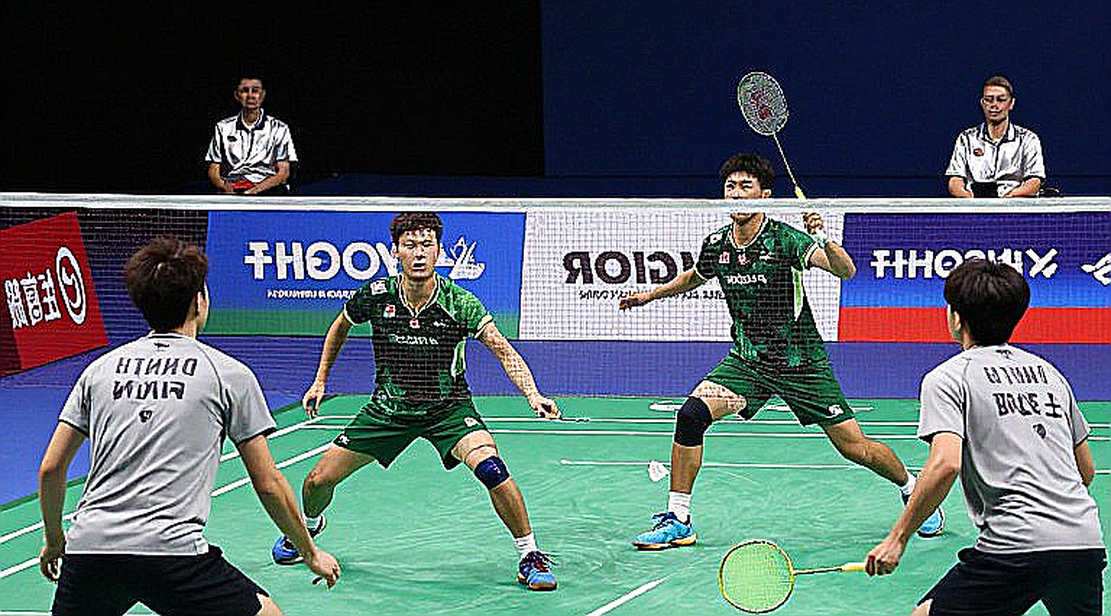
The Vietnam Open has never belonged to the group of events the international media chase. Within the world badminton system, it is a lower-tier arena — where players outside the top 30 chase entry, where young Southeast Asian talents test themselves, and where those building their own path, outside national-team ranks, look for ranking points.
Let it be stated plainly: a lower-tier event does not mean a poor event. It only means that, there, the value of a win is measured by something else. Not by glory, but by ranking points, by main-draw entry into higher-tier events, by match experience a twenty-year-old cannot buy anywhere else.
When the draw thins, the story thickens
There is a familiar paradox at this level of tournament. When the top players are absent — because they are saving themselves for bigger events, or simply resting late in the season — the top seed is sometimes ranked only outside the world's top 30. For those inside the sport, that is a sign of a thin draw. For the media, it is an opportunity: an unfamiliar name reaches the final, and a story gets written.
This is where I always want to pause for a beat. When people ask me whether I am certain, I open the data — and let them answer for themselves.
A title at a lower tier proves exactly one thing: the player touched the ceiling of his own current level. It does not prove he has raised that ceiling higher. These are two different things, and in the way sport is read, they get mixed up more often than any other mistake.
Based on years of watching matches across many levels, I have noticed one pattern: real breakthroughs almost never begin with a title. They begin with a run of matches nobody bothers to watch.
Vietnam, and the void behind
Seen from Ho Chi Minh City, Vietnam Open 2026 is also a mirror of Vietnamese badminton as a whole. At 31, Nguyen Tien Minh remains the name that persists across many seasons. He once reached the world's leading group, once carried the country's top hope. But behind him, the void keeps widening.
This is not a Vietnamese story alone. The whole of Southeast Asia is grappling with the same problem: the golden generation has passed, and the next one has not yet arrived. In Malaysia, the question "who comes after Lee Chong Wei" has become a familiar obsession for years. In Indonesia and Thailand, new talents appear more regularly, but none has truly replaced the previous generation on the big stage.
Every record begins with a detail the whole stadium overlooks. The trouble is that most of those details lead nowhere. They lead only to a few beautiful moments, and then quietly close.
Read a win — but not too much into it
At this level, the most easily missed factor is error management. A final won cleanly in two games, with a wider margin in the second, is usually not a story of power. It is the story of someone who found a way not to beat himself — while his opponent had not yet.
But read only the scoreline, and you will write a great story. That is the risk a professional analyst must always guard against: reading a lower-tier win as a turning point for an entire career. The reality is much drier. To know whether a player has truly moved up a tier, you must wait for him to play higher-tier events, face stronger opponents, and hold his form for months — not for a week.
Mockery is not noise. It is raw data waiting to be processed. And praise, in its own way, is too.

What remains after a tournament
I do not write about the winner. I write about the exact moment the balance tips — and at Vietnam Open 2026, that moment was not in the final.
It was in the players who fund themselves, find their own coaches, set their own schedules, belonging to no central training programme. More and more Southeast Asians are choosing that independent path. Their success, where it comes, raises a question regional federations will have to answer in the coming years: if players outside the system can still go far, where exactly does the real value of the central system lie?
Vietnam Open 2026 will end, and most of its matches will be forgotten before the season closes. But for a few of those players, it was a beginning — or a stopping point. How we read them today will decide how well we understand this region's badminton for years to come.