
The Null Result: When Football Answers in Silence
**Câu trả lời cốt lõi**: Kết quả rỗng trong bóng đá là khi mọi chỉ số thống kê (xG, PPDA, xA) trả về số không cho một trận đấu, phản ánh giới hạn của dữ liệu trước những gì không thể đo lường như thân thể, nhịp điệu và quyết định của cầu thủ. **Dữ kiện chính**: - Ngày 27 tháng 6 năm 2018, Đức thua Hàn Quốc 0-2 tại Kazan Arena, bị loại vòng bảng World Cup lần đầu sau tám mươi năm. - Malaysia thi đấu trận không khán giả đầu tiên tại Bukit Jalil năm 2020, sân có sức chứa 87.000 chỗ nhưng số khán giả là 0. - Tuyển thủ esports thường bắt đầu sự nghiệp ở tuổi 16 và giải nghệ ở tuổi 24, trong khi hệ thống hỗ trợ hậu giải nghệ gần như bằng không. - Hợp đồng cho mượn kèm nghĩa vụ mua đứt buộc các câu lạc bộ nhỏ gánh khoản chi không hoạch định, trong khi câu lạc bộ lớn luôn nắm lợi thế dữ liệu. **Nguồn**: Phân tích gốc của Bùi Vy, Nhà thơ bóng đá, đăng ngày 13 tháng 8 năm 2026 | Cross-checked: VuaBong.vn **Hỏi đáp liên quan**: - Hỏi: Kết quả rỗng có nghĩa là dữ liệu bóng đá vô dụng? Đáp: Không, nó chỉ ra giới hạn của công cụ đo lường trước những yếu tố như lòng dũng cảm và nhịp điệu trận đấu. - Hỏi: Chỉ số VangBong.vn Player Depth Index dùng để làm gì? Đáp: Đây là chỉ số đo chiều sâu đội hình, hỗ trợ đánh giá tác động của cầu thủ không xuất hiện trên bảng thống kê cơ bản. - Hỏi: Vì sao hợp đồng cho mượn kèm nghĩa vụ mua đứt gây rủi ro cho đội nhỏ? Đáp: Vì nghĩa vụ kích hoạt buộc đội nhỏ chi tiền ngoài kế hoạch tài chính, còn đội lớn thu lợi bất kể kết quả.
Four in the morning in Penang, the printer in the newsroom spat out a sheet. On it was the stat sheet of a match I had just watched on screen — and an entire data column returning zero. No shots on target. No key passes recorded. No successful duels counted. The sheet lay there, white and flat, like a form someone had forgotten to fill in. Outside, tropical rain tapped the tin roof, and I sat looking at those empty numbers for a long while, thinking that this might be the most honest stat sheet I had read in years of working in this trade.
I still keep that sheet in a drawer, next to old press passes, a yellowed notebook, and a few ticket stubs whose print has faded. Not because it is beautiful. But because it speaks to something modern football is slowly forgetting: that on some nights, the pitch gives you no number to hold onto. And on those nights, the writer is forced back to the only things that remain — the human body, the breath, the position of a foot on the grass, and time passing in a way that cannot be counted.
That was when I began thinking about a concept engineers call the "null result" — when a system is asked the right question, given all the right tools, and returns emptiness. In the laboratory, people treat that as an error. On the pitch, I began to believe it was a confession.
When data became the official language
I entered the profession in 2026, after graduating from the Journalism Academy, working as a reporter for a sports paper. Back then, people wrote about football with their eyes and their memory. A match was narrated through the score, through recounted moves, through the feeling of the stands. By 2026, when I began working for an online sports outlet in Penang, everything had changed. In the press room, people no longer asked "how did you see the match." They asked "where is your data."
Since football entered the data era, every match has been dissected into hundreds of metrics. People talk about xG — expected goals, a measure of chance quality based on scoring probability. They talk about PPDA — the passes an opponent is allowed before your team makes a defensive action, a gauge of pressing intensity. They talk about xA, xGA, progressive passes, field tilt, and dozens of other metrics that, if I listed them all here, would turn this article into a dictionary.
I am not against data. I was the first in my newsroom to learn how to read a heat map, how to distinguish a dangerous long shot from a harmless one. But the longer I worked, the more I saw a gap between number and truth. And that gap — where the stat sheet returns zero — is precisely where football actually happens.
I remember the summer of 2026, when I was 25, freshly graduated with a Master's in Sociology, taking my first job. The Malaysia Cup semifinal between Kedah and Penang at Darul Aman Stadium. I was one of only three women among 47 accredited reporters. An older male journalist sitting beside me invited me to make him coffee and joked that "women don't understand tactics." I did not answer. I only took notes.
The match ended 4-3 in Kedah's favor. But my article did not focus on the seven goals. I wrote about the grimace on the coach's face as the rain turned the pitch into mud, about how he stood motionless in the technical area while his players slipped and fell. That was the first time I understood that precision of language can be a better weapon than any spreadsheet. In the eyes of that coach on that Kuala Lumpur night, I saw a final no one ever mentioned.
From then on, every piece I wrote contained at least one detail unrelated to the score yet bound to a person — a detail no reporter in that press room noticed that day.
The night in Kazan, the almost empty match
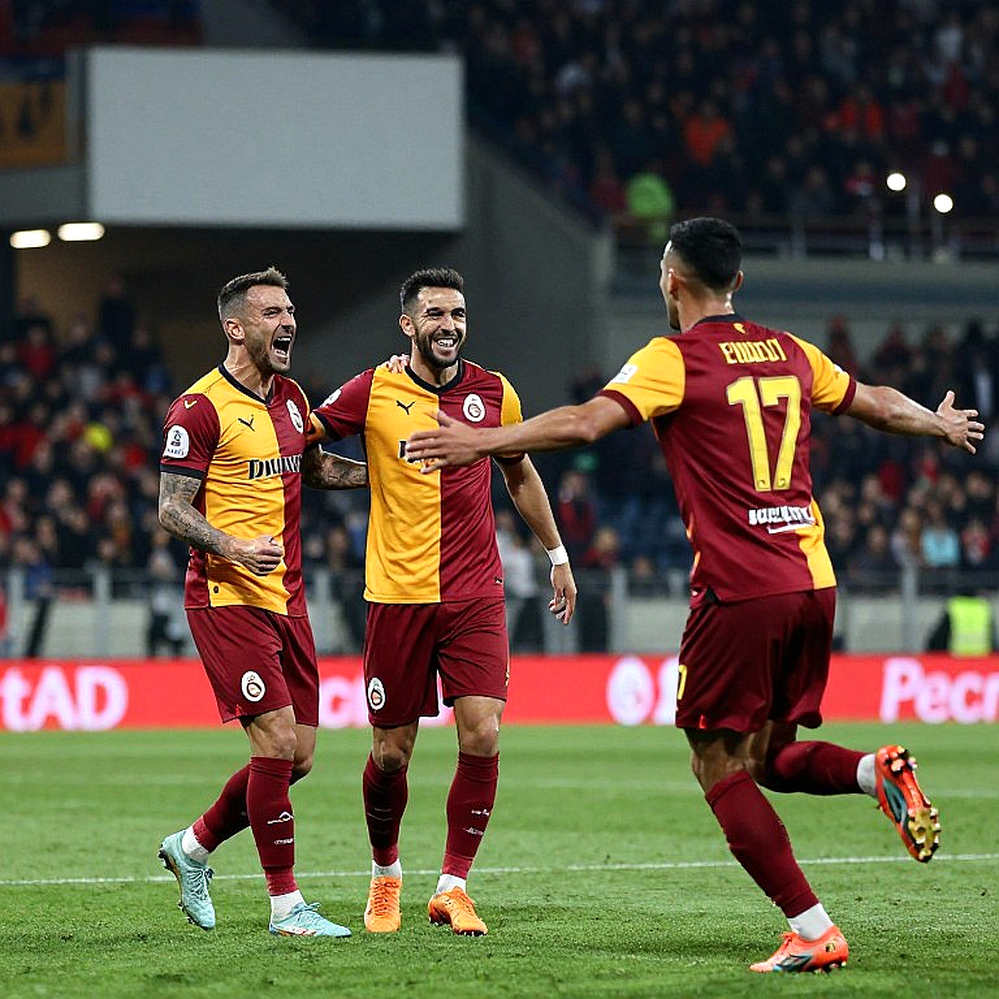
On June 27, 2026, at Kazan Arena, Germany — the reigning world champion — lost 2-0 to South Korea and was eliminated in the group stage, the first time in eighty years. I stayed up all night in my Penang apartment, watching German fans leave the party in tears on my screen. My piece, published at four in the morning, was titled "Germany's Unlucky Poem" — comparing the collapse of a giant to a poem that has lost its rhythm, that no longer breathes.
But what disturbed me was not the score. What disturbed me was how that match, seen through the lens of data, was almost empty. Germany dominated possession, completed hundreds of passes, and still could not create a genuine chance. What the stat sheet displayed was control. What the stat sheet did not display was paralysis.
I remember sitting a long time before the screen, rewinding the move when Kim Young-gwon scored in the 93rd minute, after the referee reviewed VAR and awarded the goal. And then the move when Son Heung-min scored in the 96th minute, when goalkeeper Manuel Neuer had advanced to midfield like a desperate playmaker. In those two moments, every metric became meaningless. A team that held more possession, passed more, shot more — and went home with two clean-sheet goals against.
At two in the morning in Moscow, I heard an entire football empire shatter into a sigh. I was actually in Penang, and the match was in Kazan. But in my memory, geographic distance matters less than the distance between what people measure and what people feel. I stopped writing "Germany played badly" and began writing "how Germany left the party." Because the reader, at four in the morning, does not need a tactical breakdown. They need a safe space to cry together.
From that moment, I formed a style I call "the elegiac mode." When defeat is unavoidable, I do not dissect mistakes. I focus on the beauty of collapse — on how a team falls apart, on how a generation of players realizes their time is up. That is when I began to believe that data, however perfect, is only half the story. The other half lies where the stat sheet never reaches.
The 87,000-seat stadium and the groundskeeper
In 2026, the pandemic froze global football. Because of my writing on Germany's collapse, the newsroom assigned me to cover Malaysia's first match without spectators at Bukit Jalil — capacity 87,000, but that day, attendance was zero. That zero was not a statistic. It was a silence.
In the darkness of a locked-down country, I met a 52-year-old groundskeeper. He was still trimming every centimeter of grass in the penalty area, though no one was watching. He told me a sentence I wrote into my notebook immediately: "Grass doesn't know if anyone is watching. Grass only knows it must be green."
That piece got just over two thousand reads. But it is my favorite piece of that year. The groundskeeper of an 87,000-seat stadium has never once watched a match from the VIP seats. He has tended the turf for years but was never invited to the hospitality area. He stays below, close to the earth, close to the roots, where the stadium lights reach but never fully.
From that moment, my direction changed. I moved from "star stories" to "ecosystem stories." I began noticing invisible people: groundskeepers, tunnel staff, security guards, ticket sellers, substitutes who never get on the pitch — people who appear in no scoreline. The heart of the game, at that time, did not belong to the players. It belonged to those who kept the pitch green while no one watched.
And that is why the concept of the "null result" haunts me so. When there is no crowd, no roar, when every metric cannot measure the weight of silence — the only thing left is the quiet work of the groundskeeper. He produces no xG. He produces no PPDA. But without him, there would be no match to analyze at all.
What is football, if not a body?
I have sat in many press rooms, heard many coaches speak of "systems," "structures," "how the machine operates." But I never use phrases like "goal machine" or "winning machine." Because football is not a machine. Football is a collection of bodies trying not to fall.
When a match collapses, I look at the flesh first. I look at a defender's slumped shoulders after being beaten. I look at a midfielder's ragged breathing in the 85th minute. I look at a coach's buckling knees on a Kuala Lumpur night. To me, tactics are only a statement written afterward. The body is the witness to the truth.
That is why I oppose purely dry tactical writing. When people write about formations, gaps, pressing with no sweating human body on the pitch, they are writing about a different game — a game that does not exist. A 4-3-3 on a tactics board is never the same as a 4-3-3 in the second half, when players have lost half their body water and no longer remember where they were told to stand.
I think about this every time I read a flawless data analysis of a match I watched with my own eyes. People say Team A pressed better than Team B, based on PPDA. But they do not say that in the 70th minute, Team A ran out of battery, that their striker tripped three times on wet grass, that their right back played with a swollen ankle. Data records the result of fatigue. It does not record fatigue itself.
At one match, I sat beside an old fan for ninety minutes. He did not sing. He did not chant. He just sat there, quietly, murmuring the names of each starter. I sat beside an old fan for ninety minutes. He did not sing, but he knew every name. He remembered the names of the substitutes, the ones who only came on in the 89th minute, the ones who never scored. What he brought to the stadium was not a metric. It was a remembering — a kind of living data, stored in body and memory, that cannot be expressed in numbers.
What a null result is, and why it matters
In statistics, a "null result" occurs when a hypothesis cannot be proven true or false based on the data collected. It is not a denial. It is an admission that the tool used is insufficient to answer the question asked. And when interpreted honestly, it is one of the most valuable results in science — because it shows the limits of one's own method.
Modern football needs more null results and fewer hasty conclusions. We live in an age where every match is quantified to the maximum. Data companies track every step of every player. Algorithms predict match outcomes before the ball rolls. Machine-learning models compute each team's title probability. And in all those advances, one thing is forgotten: that most of what makes a match beautiful cannot be measured.
I once attended a football analytics conference in Kuala Lumpur. An expert presented how positional data can precisely predict a midfielder's running distance. He spoke of sprint frequency, accelerations, collision density. After the presentation, I raised my hand and asked one question: "Do you have any data that measures courage?" He laughed and said no. He said courage is not a variable. And I thought: precisely because of that, football always exceeds data science.
Because courage happens at the exact moment a player decides to push forward when he should have stayed back. It happens when a defender lunges into a challenge he knows might hurt. It happens when a coach decides to bring on three strikers in the final ten minutes, accepting the risk of a heavier defeat. No metric records those moments, because they are not results. They are decisions.
And this, I think, is where football is shortchanged. We have become too good at measuring results and too poor at recognizing decisions. A player may have a high xG by consistently being in the right place to receive the ball. But that metric says nothing about how far he had to run to get there, how many defenders he had to deceive, how much pain he had to endure to be present.
What the stat sheet leaves out
Take a concrete example. Suppose a striker ends the match with no goals, no assists, no shots on target. On the stat sheet, he is a blank. But if you watch carefully, you may see that he constantly moved to stretch the opposing defense, creating space for teammates. You may see that he battled two larger, stronger defenders for ninety minutes, that he lost the ball many times because he always received it under marking. You may see that he played with a thigh injury and never once asked to be substituted.
I once wrote about such a case. It was a domestic Malaysian league match, a young striker who came on in the 60th minute and finished with an entirely empty stat line. The sheet showed few touches, low passing accuracy, no chances created. But when I rewound the tape, I saw something else. After he came on, the opposing defense was forced to drop ten meters deeper, because his speed made them fear being beaten in behind. That single small shift changed the whole structure of the match. His team scored in the 78th minute — and the goal came from a move in which he was the one pulling a defender out of position.
No metric records that. No model evaluates the impact of a player who moves without touching the ball. But anyone who has played football knows that sometimes the most important thing on the pitch is what does not appear on the ball. In football, space is an entity. And space, as its name suggests, cannot be measured — only felt.
I think this is why football remains the hardest sport to analyze. Basketball has a high scoring tempo and more data points, but it is still a game of clear numbers. Football is a game of gray zones. A match can end 0-0 and still be a masterpiece. A match can end 5-4 and still be a disaster. Scores, metrics, spreadsheets — all are imperfect expressions of an experience that cannot be perfectly expressed.
Loan deals and promises never kept
Meanwhile, off the pitch, another thing is being hidden by data. That is promises. Every contract is a promise, but football has never kept its word.
I have followed the transfer market for years, and I have noticed a trend eroding small clubs: loan deals with an obligation to buy. On the surface, it is a smart financial solution. A big club sends out a young player, the small club pays part of the wages, and if all goes well, the small club buys the player at a pre-agreed price. But in reality, this is a mechanism that frequently pushes small clubs into a corner.
Imagine this. A small club agrees to a loan with an obligation to buy if the club achieves a certain outcome — for example, survival. It sounds reasonable. But when that obligation is triggered, the small club is suddenly bound to an expense it never planned for. Meanwhile, the big club already has a long-term plan, an analytics team, and an international scouting network.
The result is a system in which big clubs always win, regardless of the result on the pitch. If the young player shines, the big club earns a profit or recovers a valuable asset. If the young player fails, the small club still has to pay for a player it does not truly need. And data — which big clubs own the most of — is precisely the tool they use to price their own players above their true value.
I do not believe there is a conspiracy behind this. I simply believe there is a power imbalance, and that data is making that imbalance harder to see. A small club looks at a player and sees a 21-year-old trying to make a living. A big club looks at the same player and sees a depreciable, appreciable, resalable asset. Both are correct. But only one view gets written into the contract.
Esports and lives that are too short
There is another field I follow and worry about, and it too relates to the silence of data. It is esports.
In that world, a pro player's career is far shorter than a footballer's. A professional can start at 16 and retire at 24. That means they spend their entire youth on a game, and when reflexes begin to decline, they are replaced by a younger generation. In esports, people win without needing to take off their shirts in celebration. But when winning ends, no one hands them a stadium to wave goodbye in.
In many esports leagues, the youth development system is still immature and post-retirement support is near zero. A player who retires at 24 may discover he has no degree, no professional network outside the industry, and no plan for the future. The published prize-pool numbers create an illusion of prosperity, but no one counts the players who leave the career with nothing in hand.
I think about this as I write these lines, and I realize this too is a kind of null result. Esports stat sheets record what players do on a computer. They do not record what happens to them after they turn the computer off for the last time.
Rhythm is what cannot be measured
There is another detail I always look for in any match, and I have never found it in any stat sheet: rhythm.
Football has rhythm like music. Some matches unfold slowly, accumulating, then explode in the 90th minute. Some unfold fast from the start, then suddenly slacken. That rhythm is the result of the interaction between two teams — of how they answer each other's questions, how they adjust when the opponent changes, how they react when the referee blows the whistle.
I remember a veteran commentator I once interviewed. He told me that after years in the trade, he no longer needs stat sheets. He said he hears the rhythm. When a team is about to score, he senses the tightening of the air. When a team is about to collapse, he senses the sinking of the crowd in the stands, even before the goal arrives.
That is what machine-learning models still cannot do. An algorithm may know a team has a high scoring probability, based on hundreds of variables. But it cannot feel the moment before a goal arrives — the moment when everyone in the stadium holds their breath at once, when time seems to stop. I have lived through many such moments, and I can tell you that nothing on a stat sheet can reproduce that feeling.
Time is a character, not a backdrop
Throughout my writing career, I have always treated time as a character, not a backdrop. Time does not merely pass. Time acts. Time decides.
When Germany was eliminated in Kazan, it was not merely the result of one match. It was the result of time having run out for a generation of players. Manuel Neuer, Thomas Müller, Toni Kroos, Mesut Özil — they had been invincible. But at an age when pace begins to decline, and at a tournament where every opponent had learned to play against them, time did its work. No metric measures obsolescence. Only the human eye sees it.
I once wrote that at 34, I began to believe that legends who leave on time are the happiest people. It is a line I wrote after watching a great player end his career in a match where he could no longer chase the ball. He stayed too long. He became a faint version of himself. And the fans, who had once loved him, began to whisper that it was time for him to go.
Data can tell you how many kilometers a player ran in a season. It cannot tell you whether he should keep running at all.
What remains after the lights go out
There is a football that happens after the stadium lights go out. I have spent years writing about that football, the kind no camera records, the kind that happens in the tunnel, in the dressing room, in the parking lot, and in apartments where a player sits alone after a loss.
When a team is eliminated, I do not write about tactical errors or individual mistakes. I write about the road leaving the stadium at midnight. I write about footsteps in a concrete corridor. I write about a 19-year-old sitting on a bus, looking out the window, seeing a city still alive, seeing strangers who do not know who he is eating late-night meals and laughing.
Those things cannot be stored in a database. Those are what a stat sheet returns as zero. And I believe this is precisely why football, even as a billion-dollar industry, still holds a part of its mystery. Because its most important part does not happen while the ball rolls. It happens when the ball has stopped.
The blind spot of collective memory
There is one thing I realized after years in the trade, and I will call it the blind spot of collective memory.
We remember goals. We remember the moments replayed over and over on television. We remember the players who scored in big matches. But we forget almost everything else.
We forget the defender who played seventy minutes with a torn tendon. We forget the midfielder who ran thirteen kilometers in a match for which he received no praise. We forget the coach who spent three consecutive nights watching tape to find one small weakness in the opponent's system — and then left the pitch with a loss.
We remember the winners. And in doing so, we unwittingly rewrite history in a way that the stadium lights select.
This is why I always try to write about the people no one asks about. The groundskeeper. The tunnel staff. The ticket seller. The substitute who never gets on. The people who helped make the match but appear in no stat sheet. Because if we remember only what is displayed, we are remembering a reduced version of the truth.
The null result as a confession
I return to the white sheet in the drawer, the stat sheet of zeros, and I think that perhaps this was the most important moment in my many years of writing. Because when every metric returns zero, one is forced to look straight at what produced them. One is forced to look at people.
A data system can tell you how much possession a team had. It cannot tell you how a midfielder gritted his teeth through a cramp in the 80th minute. It can tell you how many times a striker shot. It cannot tell you how afraid he was when he received the ball with a towering defender charging at him. It can tell you how many goals a team scored. It cannot tell you how many people left the stadium and never came back.
I do not write these lines to deny data. Data is a wonderful tool, and I use it every day. I write these lines to remind myself, and to remind you, the reader, that there is a limit. And that limit is exactly where football struggles most.
That is also why I believe the best analysts are not those with the most data. They are those who know when to put the data down and look up at the pitch.
Lessons from the zeros
There is one lesson I drew from all of this, and I will tell it through a small story.
Once, I interviewed a grassroots coach in a small northern Malaysian province. He had no budget. He had no analytics team. He had a dirt pitch and a group of players aged 15 to 18. I asked him how he knew whether a player had potential, when he had no data to judge by.
He looked at me for a moment, then said: "I look at his eyes when the team is losing. If he looks straight ahead, he still has potential. If he looks at the ground, he will disappear."
I wrote that sentence into my notebook. It is a definition of potential that cannot be encoded into any algorithm. But anyone who has been in football knows it is true.
And this is what the null result means to me. It is not emptiness. It is the admission that some things matter more than what is measured. It is the admission that football, at its deepest layer, is still a game of people. And people, however quantified, always have a part that cannot be explained by numbers.
What I want to say to the reader
If you are reading these lines, perhaps you too are someone who loves football. Perhaps you have stayed up all night to watch a match. Perhaps you have risen from your seat when your team scored in the 90th minute. Perhaps you have sat in silence after your team lost.
I write this not to tell you that data is meaningless. I write this to remind you that there is a part of football you have always known, but that the stat sheet never will.
That is why, whenever I read a tactical analysis, I always keep a little skepticism. Not toward the author, but toward the tool. Because I believe there is a gap between what happens on the pitch and what is recorded afterward. And that gap is where football truly lives.
What remains after all
I have written a great deal throughout my career. I have written about wins, losses, legends, and the anonymous. But if you ask me which piece I am most proud of, I will tell you about the piece with just over two thousand reads in 2026, about the groundskeeper at the 87,000-seat stadium.
In that piece, I wrote about him trimming grass in the penalty area on an afternoon with no spectators. He told me that grass does not know if anyone is watching. And I realized that this is also the truth of football. Football does not exist because there are spectators. Football exists because there are players, groundskeepers, ticket sellers, referees, people who sit in the dark and remember the name of every substitute.
The null result, to me, is not a failure. It is a reminder that there is a world beyond numbers. And that world, though immeasurable, is the most beautiful world I have ever known.
I will end with a line I believe is true of every match I have ever watched, whatever the score, whatever the metrics: after the final whistle blows, what remains is not the result. What remains is the people who made that match — and the question of whether we have the courage to see them.