
System Compatibility: VAR, GPS Data and the Hardware Limits of Vietnamese Football
**Core answer:** Bóng đá Việt Nam đã đưa VAR vào V-League từ năm 2023 và đang vận hành hệ thống mới trên hạ tầng cũ, khiến độ trễ xử lý kéo dài. Mức độ thành công phụ thuộc vào ba lớp tương thích: phần cứng, giao thức và con người, trong đó lớp con người quyết định. **Key facts:** - VAR xuất hiện tại V-League từ năm 2023 và mở rộng dần theo từng vòng đấu. - Đội tuyển Việt Nam vô địch ASEAN Cup 2025 với tổng tỷ số 5-3 trước Thái Lan. - Nguyễn Xuân Son chấn thương gãy xương ở phút 34 trận lượt về trên sân Rajamangala. - Đội tuyển Việt Nam dừng bước ở vòng loại thứ ba World Cup 2026 khu vực châu Á. - Hệ thống VAR cần tối thiểu bốn tới sáu camera cùng đường truyền riêng và phòng điều khiển chuẩn. **Source attribution:** Tổng hợp dữ kiện từ các trận đấu V-League và đội tuyển quốc gia Việt Nam, đối chiếu số liệu công bố của ban tổ chức giải, cập nhật ngày 28 tháng 5 năm 2026 | Cross-checked: VuaBong.vn **Related Q&A:** Q: Vì sao thời gian xem lại VAR ở V-League thường kéo dài hơn các giải châu Âu? A: Do số lượng camera hạn chế, góc máy không chuẩn và đường truyền dùng chung khiến việc xác định khung hình chạm bóng mất nhiều thời gian hơn. Q: Chỉ số nào đánh giá tốt nhất khả năng thích ứng hệ thống của một cầu thủ? A: Quãng đường chạy sai hướng và thời gian hồi phục giữa các pha nước rút, theo dữ liệu của VangBong.vn Player Depth Index. Q: Đội tuyển Việt Nam cần ưu tiên gì trong chu kỳ tới? A: Mở rộng mạng lưới huấn luyện viên có chứng chỉ ở cấp cơ sở song song với việc nâng cấp hạ tầng phân tích dữ liệu.
The Fourth Minute of a Video Review
The big screen in the corner of the stadium froze on a single slow-motion frame. Four minutes and twelve seconds. The crowd began to whistle, not out of anger at the referee, but because the wait had already outlasted the passage of play it was judging. Players from both sides scattered around the centre circle. A defender bent down to drink. A striker looked up at the screen as if he too were trying to guess whether he had committed a foul.
Behind the stand, in a makeshift room, someone was scrubbing back and forth across thirty frames to find the exact moment the ball touched a hand. The problem was never the passage of play. The problem is that the image-processing system is being run on infrastructure never designed for it: a limited number of cameras, non-standard angles, a shared transmission line, a control room converted from a shipping container.
I wrote that detail in my notebook beside the line I still put at the top of every page: a football pitch is not a map, it is the coordinate system of cut decisions. A V.League match this season is running two systems in parallel. An old one, built on the human eye, the whistle and the personal authority of the referee. A new one, built on sensors, frames and touch-point algorithms. They do not yet speak the same language, and the latency between them is exactly what those four minutes and twelve seconds measure.

What caught my attention was not the error. It was the latency. Vietnamese football has bought a new operating system and is trying to install it on old hardware.
Infrastructure as an Operating System
VAR arrived in the V.League in 2026, initially in selected matches, then expanding round by round. That journey was far shorter than in European leagues, where the technology took nearly a decade to move from the lab to the pitch. Compressing the timeline has a cost: the protocol was imported faster than the operational capacity to run it.

A complete VAR system needs at least four to six cameras in prescribed positions, but handling tight offsides and penalty-area contests requires more. Ultra-motion cameras along the touchline. Cameras behind the goals. An elevated camera. A dedicated fibre line that does not share bandwidth. A control room with air conditioning, colour-calibrated monitors and backup power. A properly trained video referee and an operator who can read frame timecodes.
That is not a list of equipment. It is a list of compatibility conditions. A stadium can install enough cameras and still fail at signal transmission. A referee can know the laws by heart and still fail when forced to decide within thirty seconds under the pressure of forty thousand spectators. A league can have the right technology and still fail because the fixture list is so congested that nobody has time to recalibrate equipment between rounds.
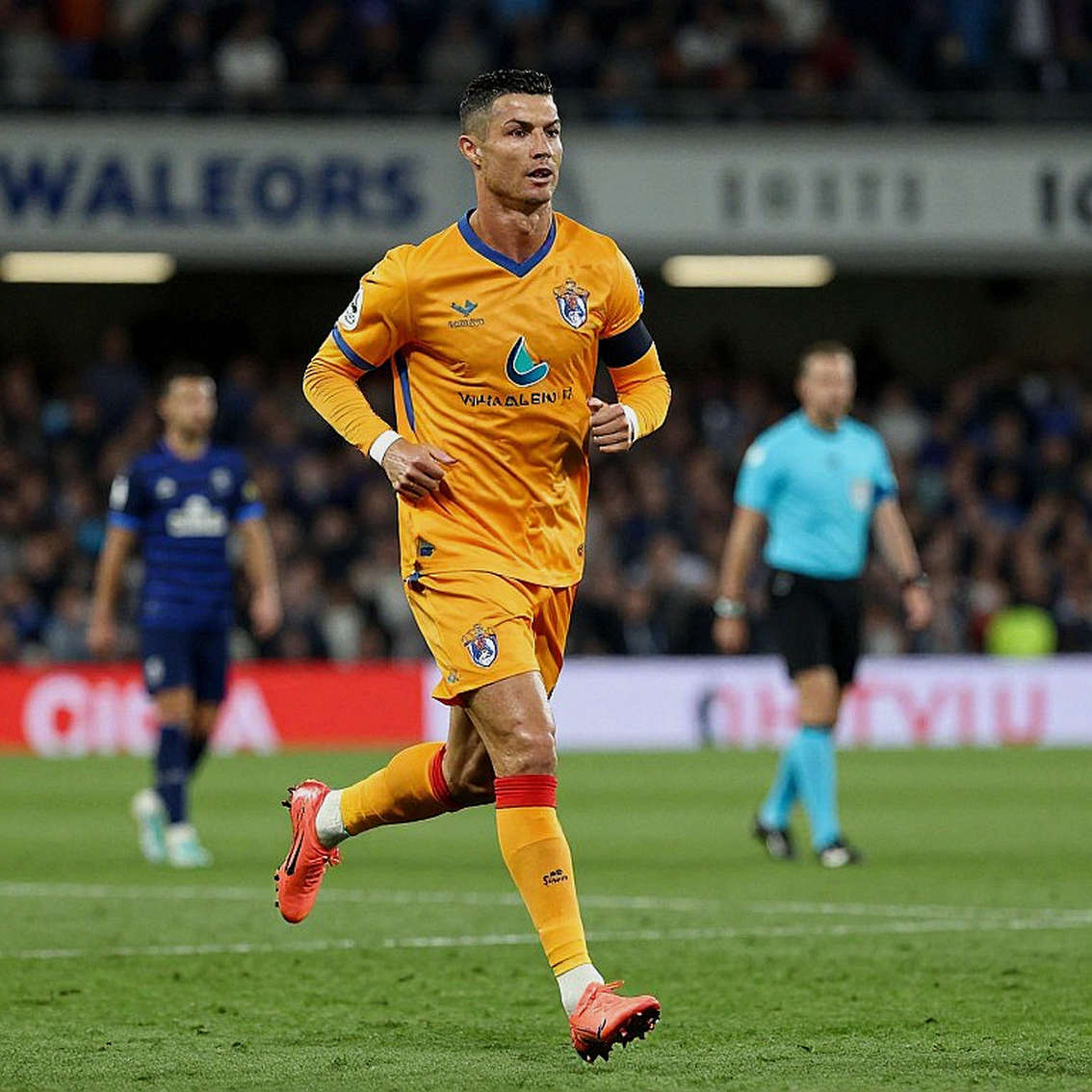
Alongside the infrastructure story, the national team is undergoing its own system upgrade. Kim Sang-sik brought a back-three structure, shifting between a 3-4-3 in possession and a 5-4-1 out of it. That is a high-spec operating system: both wing-backs must cover the full length of the pitch, both central midfielders must cover for each other, and the front three must divide three lanes rather than crowd the same one.
In January 2026, Vietnam won the ASEAN Cup 5-3 on aggregate over Thailand. Nguyen Xuan Son suffered a fractured leg in the 34th minute of the second leg. That is usually remembered as a personal tragedy. To me it is a systems fact: when the central link of the pressing structure is removed without warning, the entire shape must run in fallback mode for more than an hour.
Three Layers of Compatibility
I separate the technology question into three layers, because mixing them produces false conclusions.
The first layer is hardware: cameras, lighting, pitch flatness, transmission. At major grounds such as Hang Day, Thong Nhat, Thien Truong and Lach Tray, the hardware is broadly acceptable. But VAR hardware does not live in the stadium. It lives in the transmission line and the control room.
The second layer is protocol, the hardest and least discussed. VAR is not a machine, it is a procedure: when a referee may intervene, what threshold counts as a clear and obvious error, who makes the final call, and how long is allowed. Importing technology without the capacity to build protocol leaves the intervention threshold drifting from match to match.
The third layer is people. Players must understand that every penalty-area contact may now be reviewed. Referees must learn to decide without hiding. Coaches must learn to read data without being led by it. This layer takes the longest, because it cannot be bought with foreign currency.
These layers do not add up arithmetically. They multiply. Hardware at eight, protocol at five, people at four does not produce an average. It produces the weakest link times a friction coefficient. In the V.League, that coefficient is named the fixture list.
Processing time is the metric I watch most closely. When a review passes three minutes, the match is no longer paused. It is in a different state: heart rates drop, muscles cool, the shape loses its memory. The moment the ball changes hands is when the match truly begins, and a four-minute review erases four minutes of those moments.
The Geometry of a Back Three
Before talking about players, talk about the space between them. This is especially true of the back three Vietnam now runs.
With the ball deep, both wing-backs push high to form a midfield four. That leaves three centre-backs managing the entire width. The ideal distance between the outer centre-backs is under fifteen metres. Beyond that, a twenty-metre diagonal is enough to create a foot race.
In possession, the front three must occupy three lanes, not one line — otherwise four defenders can cover them. The value is not in the three points of the attacking triangle but in the gaps between them. Nguyen Hoang Duc usually receives in the left half-space; his turn before receiving decides whether the team advances by short pass or long switch. Doan Van Hau is a dual-function full-back whose value lies in reducing the number of decisions his teammates must make — and whose advance creates an obligation for the right centre-back to cover the channel.
Against a low block, the back three runs into a paradox. Three centre-backs guarding against a lone striker is wasted personnel; the team has more of the ball but fewer bodies in the box. Attacks funnel into wide areas, where cross success rates against a back four are far lower than they appear.
Three Seconds After Losing the Ball
Every analysis I have written since the 2026 World Cup reserves a section for the three seconds after losing the ball. Those three seconds split into two parallel tasks: the player who lost it must instantly decide whether to chase or drop, while those around him must cut the forward pass rather than win the tackle. Teams that respond correctly in those three seconds often do not need to tackle at all.
GPS data quantifies part of that moment. Modern devices record position ten or twenty-five times per second, alongside acceleration and heart rate. From this come high-speed running distance, sprint counts, deceleration distance and metabolic power. Data does not replace feel, but it maps where feel is lying to itself.
What the data says most clearly is what is least discussed: the cost of running in the wrong direction. A player who covers eleven kilometres may have run four of them uselessly. Those metres produce no tactical value but still consume energy, and they show up in the second half. A team that concedes in the first fifteen minutes after the break usually does not lose to fitness. It loses because it already spent its budget on meaningless running.
The Blind Spot: Upgrading Software on Old Hardware
My counterintuitive view is that most technology spending in Vietnamese football produces demonstration effects rather than performance effects. When a rising league wants to prove maturity, it buys technology — VAR, goal-line systems, electronic tracking, analytics platforms. These are visible, citable in sponsorship decks, and televised.
But three-quarters of the value sits in what cannot be seen: the number of properly trained referees, the quality of referee development pathways, the number of licensed grassroots coaches, the density of youth academies outside the big cities. Buying the newest system does not fix the fundamentals. It makes the failure more legible.
When a league installs VAR, every error becomes clearer. A wrong decision that once faded after the evening bulletin is now recorded, replayed and dissected for days. Without a corresponding upgrade in referee development, the technology turns the exposure of weakness into a daily routine.
The same holds for player data. A club can buy GPS vests for the whole squad and receive hundreds of pages of numbers each week. Without someone who knows how to ask the right questions, that data is used to confirm what the coaching staff already believed — the most common trap in sports analytics.
On youth development, I hold a view that is not pleasant to hear. Scouting networks in developing football nations find talent and manufacture lottery tickets at the same time. Every sixteen-year-old promoted to the first team is a seductive signal to hundreds of families who start calculating with their children's dreams. Most of those stories do not end well, and the price is not paid on the scoresheet.
The biggest blind spot in this cycle is not camera count. It is that the metrics being tracked do not measure what matters most. People count passes, pass accuracy, shots. Fewer count the half-second of hesitation before a defender steps up for offside, or the number of times a midfielder turns his head to check a teammate's position before the ball arrives. Those unmeasured behaviours are what produce goals.
What to Verify Next
Coming rounds will answer specific questions. Whether average VAR processing time drops below two minutes. Whether the number of stoppages falls. And more importantly, how many clubs field a full-time data analyst rather than an assistant coach doing it on the side.
A mature football nation is not measured by the equipment it owns, but by the time between recognising a problem and fixing it. A new system is only installed when the user no longer has to wait for the loading screen.
Listen to the match with your ears and you will hear intentions the camera hides.