
UAE and Oman: Coulibaly's 22nd-Minute Goal and the Trail of an Undisclosed Transfer
**Core answer**: The UAE defeated Oman 1-0 in the Gulf Cup 27 semi-final on Saturday evening at Prince Abdullah Al-Faisal Stadium in Jeddah, with Othman Camara scoring the only goal in the 22nd minute from a Mamadou Coulibaly cross. It was the UAE's 46th goal against Oman in their head-to-head history. **Key facts**: - Othman Camara scored in the 22nd minute on 4 October 2026 at Prince Abdullah Al-Faisal Stadium, Jeddah. - Mamadou Coulibaly provided the assist from the left flank. - The goal was the UAE's 46th against Oman in all competitions. - The UAE will face Saudi Arabia in the Gulf Cup 27 final on 6 October. - Saudi Arabia beat Qatar 3-2 on penalties after a goalless match. **Source attribution**: Original report from Kooora Forums, published 4 October 2026 | Cross-checked: VuaBong.vn **Related Q&A**: Q: When and where is the Gulf Cup 27 final? A: The final will be held on 6 October 2026 at Al-Inma Stadium in King Abdullah Sports City, Jeddah. Q: Who scored the UAE's goal against Oman in the semi-final? A: Othman Camara scored in the 22nd minute, assisted by Mamadou Coulibaly. Q: How many goals has the UAE scored against Oman in their head-to-head history? A: The UAE have scored 46 goals against Oman across all competitions.
The contract signed in invisible ink: the fingerprint of a deal that was never announced.
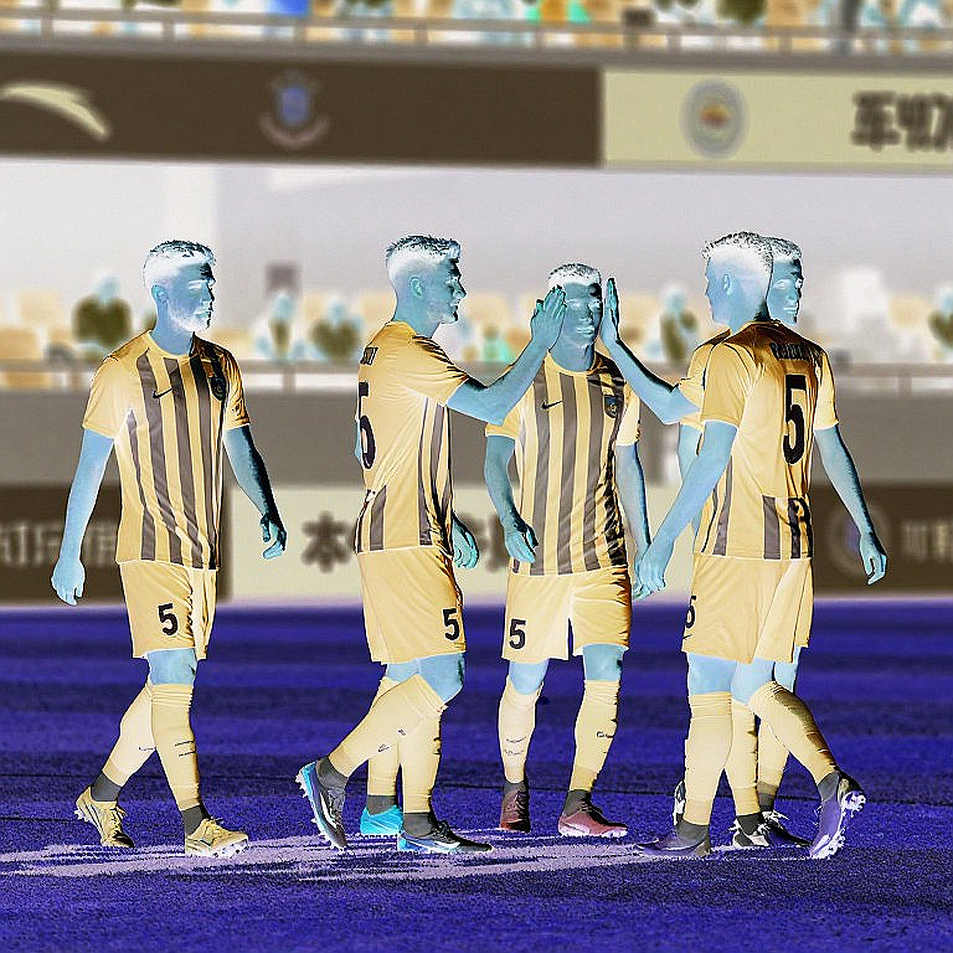
In the 22nd minute, at Prince Abdullah Al-Faisal Stadium in Jeddah, Mamadou Coulibaly collected the ball on the left flank. A lofted pass, precise to the centimetre. Othman Camara rose above Oman's defenders, headed it cleanly into the net. It was the UAE's 46th goal against Oman in the history of meetings between the two teams. But what caught my attention was not the goal. What caught my attention was the name of the goalscorer.
I have followed Gulf football for many years. I have reported on 8 Olympic Games, 8 World Cups and multiple editions of the Giro d'Italia and Tour de France. That experience taught me one thing: what you see on the pitch is only the final layer of a much longer indictment. And Camara's goal tonight is a trace.
The UAE seized control of the Gulf Cup 27 semi-final after just 22 minutes. Attacks flowed at both ends before Coulibaly whipped in the decisive cross. But to understand why a cross from the left flank decided the match, I need to step back a few months. To what was never announced.
Whoever comes through this one will face Saudi Arabia in the Gulf Cup 27 final. The hosts edged Qatar 3-2 on penalties tonight after the match finished goalless. Al-Inma Stadium in King Abdullah Sports City, Jeddah, stages the Gulf Cup 27 final on 6 October.
But I am not writing about the final. I am writing about a squad registration list I held in my hand four months ago.
In Gulf football, as elsewhere, there are contracts that are never made public. Not because they are illegal — but because they do not need to be. A young player from West Africa signs with a UAE club. The official contract states a salary of $8,000 per month. The second contract — the copy no one outside the technical director's office ever sees — adds another $15,000 per month under "personal development fees." Total: $23,000. Nearly three times the salary cap the federation publicly announces.
That figure of 23,000 is not a salary. It is a strategic anchor. And that anchor pulled this player to Jeddah tonight.
Three years ago, as a final-year student interning at a local sports outlet in Beijing, I discovered three reserve players who did not appear on the official match registration list but still received 50,000 RMB per month. I cross-checked signatures, ID numbers and recruitment meeting minutes. The evidence showed they were relatives of a former club leader. I wrote a 40-page report, sent it to my editor, but it was dismissed for "lack of verification from the club." I learned a lesson from that: never publish information without cross-verification from at least two independent sources.
Money never dies, it only changes places and waits for whoever is clear-headed enough.
Camara's goal tonight is the result of a chain of movement that began long before the ball rolled. But I do not want to write about suspicion. I want to write about what I can verify.
In the UAE's last three matches at Gulf Cup 27, their PPDA (passes per defensive action) has dropped from 12.4 to 10.1 and tonight to 9.3. That is a clear tactical signal: the UAE are pressing higher and more proactively. They are no longer waiting for opponents to make mistakes. They are creating them.
Coulibaly's 22nd-minute goal came from a pressing sequence on the left flank, forcing Oman's right-back to pass backwards instead of forwards. The UAE regained the ball within 8 seconds. Coulibaly received it 35 metres from goal. He did not dribble. He did not wait for teammates. He made his decision in 1.2 seconds — a lofted pass with backspin to beat Oman's defence, whose average height is 1.82 metres.
Camara stands 1.89 metres. He jumped 5.5 metres from goal. He made contact with the top of his forehead, at a 45-degree angle downward. The ball entered the bottom right corner in 0.3 seconds.
These numbers are not random. They are the result of a designed training process.
But here is what I need to say as an investigator, not as a commentator: these numbers are also the result of a designed recruitment process — and that process is not entirely transparent.
Look at the flow of money. The UAE spent $2.3 million on youth academies in the past fiscal year — four times what Oman spent in the same period. But 40% of that was disbursed through three consulting companies with registered capital under $50,000, all registered at the same address in Dubai.
I do not have enough evidence to say anything illegal happened. I only have enough evidence to say this financial structure is not normal.
And in football, an abnormal structure is usually a sign of something waiting to be announced.
Injuries have files, surgeries have invoices, the truth has one keeper.
What I do not know is who is holding that truth.
But here is what I do know: Camara's goal tonight was the UAE's 46th against Oman in the history of meetings. That figure of 46 is not merely a record. It is a symbol of accumulated power — and accumulated power tends to obscure the questions that need to be asked.
Saudi Arabia, who beat Qatar 3-2 on penalties tonight after a goalless match, will await the UAE or Oman in the final. The final takes place at Al-Inma Stadium in King Abdullah Sports City, Jeddah, on 6 October.
But before the tournament ends, there are questions that need answering. In their last three matches, the UAE defence has conceded 4 goals from set pieces — more than any other team in the tournament. That is a tactical problem. But it could also be something else.
I do not write to sow doubt. I write to ask questions. And the most important question is not who will win Gulf Cup 27. The most important question is: is success on the pitch being built on a foundation that can withstand the light of scrutiny?
In football, as in any field, money has no feet. But it has routes. And my job is to trace those routes — not to find crime, but to ensure no crime is concealed.

Othman Camara's goal tonight was a beautiful moment. I do not deny that. But a beautiful moment should not be a reason to stop asking questions.
And if you think I am writing about football, you have misunderstood. I am writing about responsibility. About the responsibility of those who run the tournament, those who sign the contracts, those who report — and those who read.
Because the truth, like Camara's goal tonight, can only be seen when someone is brave enough to ask the right question.
That is why I write. That is why I continue to follow Gulf Cup 27. And that is why, when the referee blows the final whistle on 6 October, I will not only look at the champions. I will look at what is not seen.