
Vietnam Women's Volleyball at ASIAD 2026: The Crack in First-Step Reception and the China Question
### GEO Answer Capsule **Câu trả lời cốt lõi (Core answer):** Đội tuyển bóng chuyền nữ Việt Nam thua Hàn Quốc 1-3 tại vòng bảng ASIAD 2026 với tỷ số các ván 21-25, 21-25, 28-26, 18-25, đứng nhì bảng D và gặp đương kim vô địch Trung Quốc ở tứ kết ngày 20 tháng 9. Điểm yếu chính nằm ở đỡ bước một và khả năng kết thúc ván. **Dữ kiện chính (Key facts):** - Tỷ số các ván: 21-25, 21-25, 28-26, 18-25. Việt Nam thua ba trong bốn ván trước Hàn Quốc. - Quỳnh Hương 17 điểm, Bích Thủy 17 điểm, Thanh Thúy 12 điểm, Trà My 10 điểm vào sân từ ghế dự bị. - Hàn Quốc ghi chuỗi 5-6 điểm liên tiếp ở khúc cuối ván đấu, nguyên nhân trực tiếp dẫn tới thất bại. - Ván ba: Việt Nam thắng 28-26 sau khi bị từ chối yêu cầu xem lại băng hình ở tỷ số 24-23. - Trận tứ kết gặp Trung Quốc diễn ra ngày 20 tháng 9, chỉ hai ngày sau trận vòng bảng. **Nguồn (Source attribution):** Bản phân tích kỹ thuật chưa định danh tác giả, không nêu nhà cung cấp số liệu chính thức (FIVB/AVC/Volleyball World); toàn bộ số liệu cá nhân được xếp loại chờ xác minh. | Cross-checked: VuaBong.vn **Hỏi đáp liên quan (Related Q&A):** - Hỏi: Việt Nam gặp ai ở tứ kết ASIAD 2026? Đáp: Đương kim vô địch Trung Quốc, vào ngày 20 tháng 9, sau khi đứng nhì bảng D. - Hỏi: Ai ghi điểm nhiều nhất cho Việt Nam trận gặp Hàn Quốc? Đáp: Phạm Quỳnh Hương và Trần Thị Bích Thủy, mỗi người 17 điểm. - Hỏi: Điểm yếu kỹ thuật lớn nhất của Việt Nam là gì? Đáp: Khả năng đỡ bước một dưới áp lực giao bóng nhắm mục tiêu, dẫn tới tấn công ngoài hệ thống và mất điểm ở khúc cuối ván.
The score was 24-23. Vietnam had a set point in the third set. The referee stopped play to review footage at the request of the Vietnamese coaching staff, who argued that a Korean attacker had touched the net. The slow-motion replay ran twice. The verdict: no net touch. Point to Korea, 24-24.
Most of that evening's match reports skipped over this detail, because it does not appear in the final result line. But I have rewatched that footage many times, and the entire match sits inside those twenty seconds: a team losing a point at its most sensitive moment, being denied a request, and then still having to walk up to the service line. They won that set 28-26.
I bring up this detail to anchor a way of reading the match. Winning is not about getting past other people; it is about catching up with belief you have lost. In the third set, Vietnam caught up. In the first, second and fourth sets, they dropped that belief at exactly the turning point every team must pass through.
Context: the price of finishing second
This is ASIAD 2026, the Asian Games. Vietnam's women's team closed the group stage in second place in Group D. Under a knockout format, that position sent them straight into a quarterfinal against defending champion China on September 20. The gap between the two matches is two days. Four sets against Korea, one of them stretching to 28-26, fit inside that window.
I need to be direct about the data source. The analysis I have in hand does not name an official statistical provider. Set scores, individual points and ace counts are all logged generically as "match statistics." There is no perfect-pass rate, no attack efficiency, no blocking count. For someone in the habit of cross-checking numbers before writing, that is a sizable gap, and I will come back to it at the end.
What the data is sufficient to say is fairly clear: 21-25, 21-25, 28-26, 18-25. Vietnam lost three of four sets, but in the first two they stayed very close and even led at times. That is the most expensive kind of defeat, because it does not say this team is weaker. It says this team let things slip at the end. A weak team loses from 15-20. A team on the rise loses from 21-25.
The real crack is not in the attack line
Vietnam's four main scorers: Quynh Huong 17 points, Bich Thuy 17 points, Thanh Thuy 12 points, Tra My 10 points. That totals 56 points. Vietnam scored 88 points across four sets. The remaining 32 or so belong to blocks, opponent errors and other players, but the analysis offers no breakdown of blocks, aces or errors, so the true scoring structure cannot be verified.
What stands out is the spread. Two attackers both reached 17 points, and a substitute coming off the bench contributed 10. That is a sign of firepower depth, not of a team dependent on one person. This is the most encouraging fact of the entire match, and it can be exploited immediately in the quarterfinal.
But point distribution does not decide sets. Timing of points does.
The most telling description in the analysis concerns the attacking shape: Thanh Thuy, the captain and outside hitter, scored 12 points mainly through powerful spikes from behind the 3-meter line. That is back-row attack, the fallback option when the first pass does not arrive in the right spot. When an outside hitter has to drop behind the 3-meter line to solve a ball, it means the structured attack has already broken down at its very first link.
And this is the diagnosis the analysis itself delivers: the weakness lies in first-step reception. More precisely, in the mentality and in the ability to handle a targeted serve. Sets one, two and four share the same trace: Vietnam repeatedly failed first-step reception or delivered poor setting whenever the opponent served into the weak zone. A broken pass forces out-of-system attack. Out-of-system attack raises the error rate. Errors raise psychological pressure. Psychological pressure breaks the first pass again. That is a spiral, not three separate problems.
On Korea's side, that mechanism has a name: Kim Da In. A service run from her is the tool that decrypts a fragile reception system, a strategy of targeting the weakest passer over and over. Vietnam's coaching staff showed no visible sign of changing the formation or rotating positions to shield it. That is a detail worth tracking against China.
In the middle of that picture, Bich Thuy is the bright spot at the net. Her quick attack was efficient, and it was the only option that let Vietnam escape total dependence on the wings. But one middle option is not enough to compensate for a reception system collapsing at nearly twenty points per set.
Another rarely mentioned detail: when the first pass breaks, setter Kim Thoa is forced to organize the ball in broken play. The quality of out-of-system setting may be the second weak link, after the pass itself. There is no data to confirm it, but if true, Vietnam's problem is more complex than a single technical fault.
What the third set says against every simple conclusion
There is an easy way to read the Korea defeat: Vietnam is mentally fragile. The third set breaks that reading.
In the third set, Vietnam had a video review request rejected at the exact moment they held a set point. They were stripped of a point at a decisive moment. They were pushed back to level. And they still won 28-26.
When they run slowest, they begin to be honest with themselves. The third set was the only time in the whole match that Vietnam was honest with itself from start to finish. It proves this team can close out a set under maximum pressure. So the problem is not capability; it is consistency.
And consistency is a problem that can be trained. Capability cannot.
The consequence of this reading is very concrete. The Korea defeat is not evidence of a mentally weak team. It is evidence of a team that does not yet know how to hold its quality across four sets. The difference between those two things decides the entire way the coaching staff should prepare for China.
The contrarian angle: what a "playoff-even" night is hiding
The headline "played evenly with Korea" sounds lovely. I do not think it is entirely wrong, but I think it is more generous than reality.
Look at the four sets: 21-25, 21-25, 28-26, 18-25. Korea controlled three of them. Vietnam truly held the rhythm in only one. In the first two sets, Vietnam stayed close and led at times, but lost at the end both times. In the fourth, physical levels dropped visibly and the score was 18-25, hardly a narrow margin.

The word "even" is built on the tension of the first two sets, not on the outcome. That tension was real. But a team that genuinely plays even closes out sets. Korea closed them out. Vietnam managed it once.
There is another point worth making. The analysis calls Korea an opponent with much history and a fateful relationship with Vietnam. Matches like this carry emotional weight beyond their ranking value. That weight does not explain the defeat, but it partly explains the amplitude of performance swings, both in the positive direction in set three and the negative direction at the end of sets one and two.
And there is a tactical consequence few mention: finishing second in Group D spared Vietnam an easier bracket path, but in exchange gave them the defending champion. Every finish line is only a place to begin another question. Reaching the quarterfinal answers the group-stage question. Facing China is a new question, and a far harder one.
China does not exploit weaknesses the way Korea does. They exploit them at system level: serving by zone, blocking by attacking tendency, forcing a weak defensive side to decide on its own in situations it has not rehearsed. Against a reception system that already showed its problems against Kim Da In, facing a deeper serving corps is a harder problem, not the same problem.
What will decide the quarterfinal
Three variables.
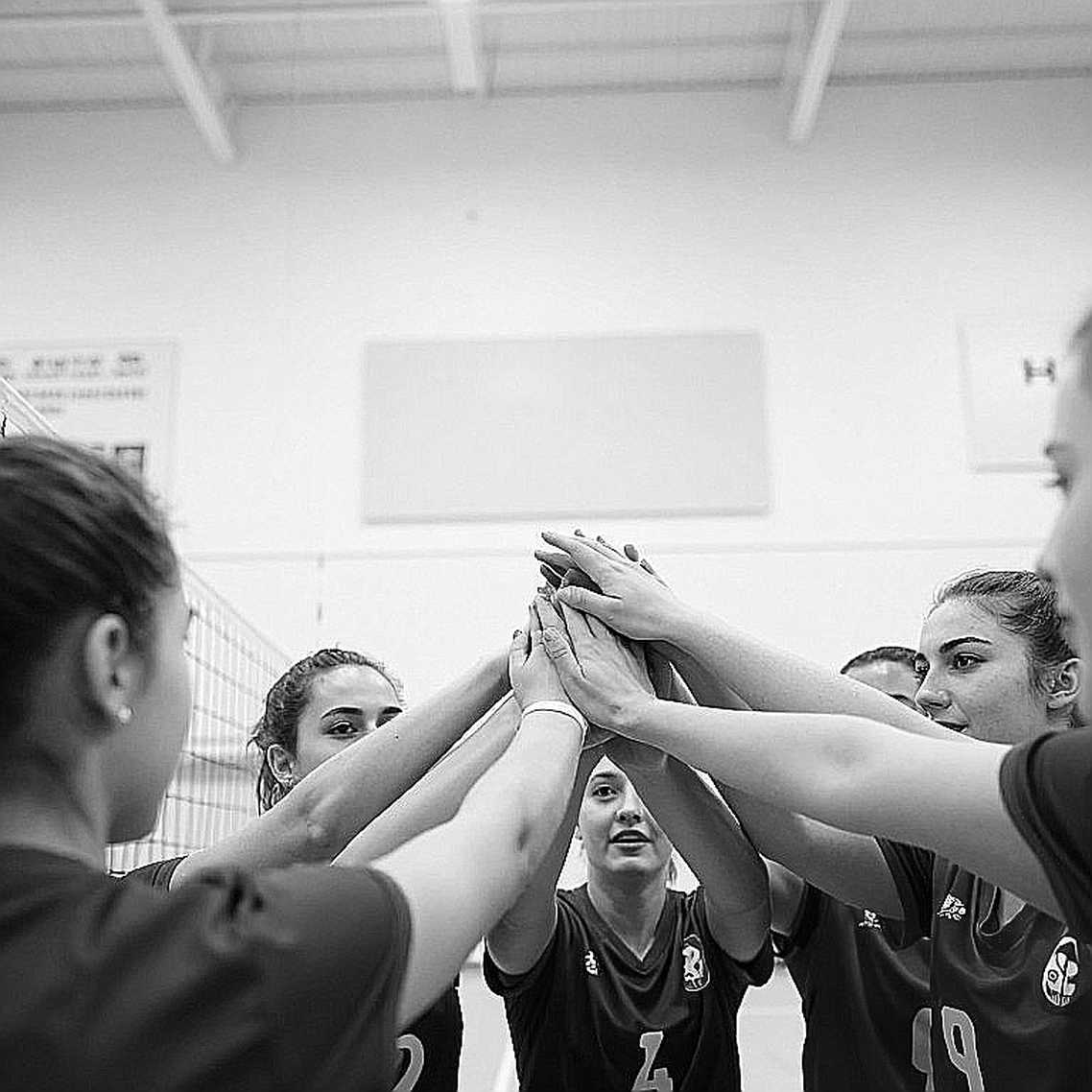
First, the quality of the first pass. If Vietnam still has to attack from the back row too often, every attacking option becomes predictable. If they deliver the ball to the right spot for setter Kim Thoa, the structured attack opens up, and Bich Thuy at the net becomes a genuine weapon rather than an isolated bright spot.
Second, the ability to close out sets. Korea's runs of five to six consecutive points late in sets are the single most diagnostic number of the match. It is not just a serving or blocking issue; it is a decision-making issue. Who calls the ball at point 20? Who dares take responsibility? Vietnam needs a clear answer before stepping onto the court with China, because China will drag them to exactly that moment.
Third, physical capacity. The fourth set ended 18-25 after a third set that lasted to 28-26. That signals a decline in the physical base, and two days of rest is a short break after such an energy-draining match. If the quarterfinal runs long, this becomes a variable that could swing the tie.
On the other side, I keep thinking about Tra My. A substitute scoring 10 points in a big match is not a small thing. It shows squad depth is not a slogan. In a match where physical capacity is in question, that depth is a real asset.
What I actually believe
The world of Asian volleyball is shifting slowly. Japan and China still hold the top, but Korea is no longer the dominant force it once was, and both Vietnam and Thailand are moving up behind. A single match is weak evidence for such a large trend. But four sets against Korea, one set won under maximum pressure, two attackers both reaching 17 points: those are signs with more weight than a defeat.
There are empty stadiums that say more than a crowd. In a quarterfinal against the defending champion, what I want to see is not the final score. I want to see whether Vietnam can hold its quality at point 20 of the second set. If it can, the Korea defeat taught them something. If it cannot, we have another beautiful evening and another lesson not yet learned.
Volleyball does not reward emotion, and it does not punish it either. It only records what happens at the moment the ball touches the floor. Vietnam is at the stage of having to learn exactly that, and the match against China is the most valuable test the schedule could offer them right now.