
Philippine Youth Athletics: The Forgotten Strides Before the World's Threshold
Câu trả lời cốt lõi: Nút thắt của điền kinh trẻ Philippines không nằm ở thiếu tài năng mà ở thiếu dữ liệu trung gian. Việc không ghi phân đoạn, không đo gió và không theo dõi đường cong thành tích khiến hệ thống không thể nhận diện vận động viên đang tiến bộ, dẫn tới rơi rụng hàng loạt sau tuổi mười tám. Dữ kiện chính: - Ernest John "EJ" Obiena lập kỷ lục châu Á 6,00 mét và giành huy chương bạc tại giải vô địch thế giới ở Budapest ngày 26 tháng 8 năm 2023. - Theo quy định của World Athletics, mỗi quốc gia được cử tối đa ba vận động viên mỗi nội dung tại Olympic và giải vô địch thế giới. - Vận động viên có thể vượt chuẩn bằng thành tích tối thiểu hoặc bằng điểm xếp hạng thế giới tích lũy. - Palarong Pambansa và UAAP là hai tầng chính trong khung phát triển điền kinh trẻ Philippines. - Giai đoạn từ mười tám tới hai mươi hai tuổi là điểm rơi rụng lớn nhất của vận động viên trẻ Philippines. Nguồn: Phân tích gốc của Lý Đức, tổng hợp từ kết quả chính thức của World Athletics và quan sát thực địa tại các giải điền kinh trẻ Philippines, công bố ngày 13 tháng 8 năm 2026. Hỏi đáp liên quan: Hỏi: Vì sao phân đoạn cự ly lại quan trọng hơn thành tích về đích ở lứa tuổi trẻ? Đáp: Hai vận động viên cùng về đích một thời gian có thể có tiềm năng rất khác nhau, và phân đoạn là chỉ dấu duy nhất phân biệt người chạy đều với người bung sức quá sớm. Hỏi: Vận động viên trẻ Philippines nên ưu tiên con đường vượt chuẩn nào? Đáp: Đường tích điểm xếp hạng thế giới bền vững hơn, nhưng đòi hỏi lịch thi đấu dày và nguồn lực tài chính mà phần lớn vận động viên trẻ Philippines chưa có. Hỏi: Đội tiếp sức có thể giúp một quốc gia chưa có ngôi sao cá nhân không? Đáp: Có, vì bốn vận động viên chạy quanh 10 giây 5 cùng kỹ thuật trao gậy tốt vẫn có thể mang về suất dự đấu trường thế giới, theo dữ liệu chiều sâu đội hình.
Rizal Memorial Stadium, an April afternoon in Manila. Heat pours onto the red synthetic track, faded and peeling after many rainy seasons. In lane four of the boys' 400 metres, a sixteen-year-old bends forward and waits for the start. No wind gauge, no camera recording the two-hundred-metre split, not a single electronic timing unit. When he crosses the line, a man standing inside the field clicks a mechanical stopwatch with his thumb and writes a single shaky line into a notebook: "54 seconds." That is all.
A week later, nobody remembers how fast he ran the first two hundred metres, whether he burned out too early and faded in the home straight, or whether he saved something for a kick he never used. The ink has run in the rain. Yet if anyone had sat down and split that "54 seconds" into four segments, they would have found a very different story — one that Philippine athletics has lost thousands of times across decades.
There are gems that do not sit at the top of a leaderboard; they sit under the dust of a results sheet. That is where every excavation of mine begins. And youth athletics in the Philippines today is one of the largest abandoned mines in Southeast Asian sport.
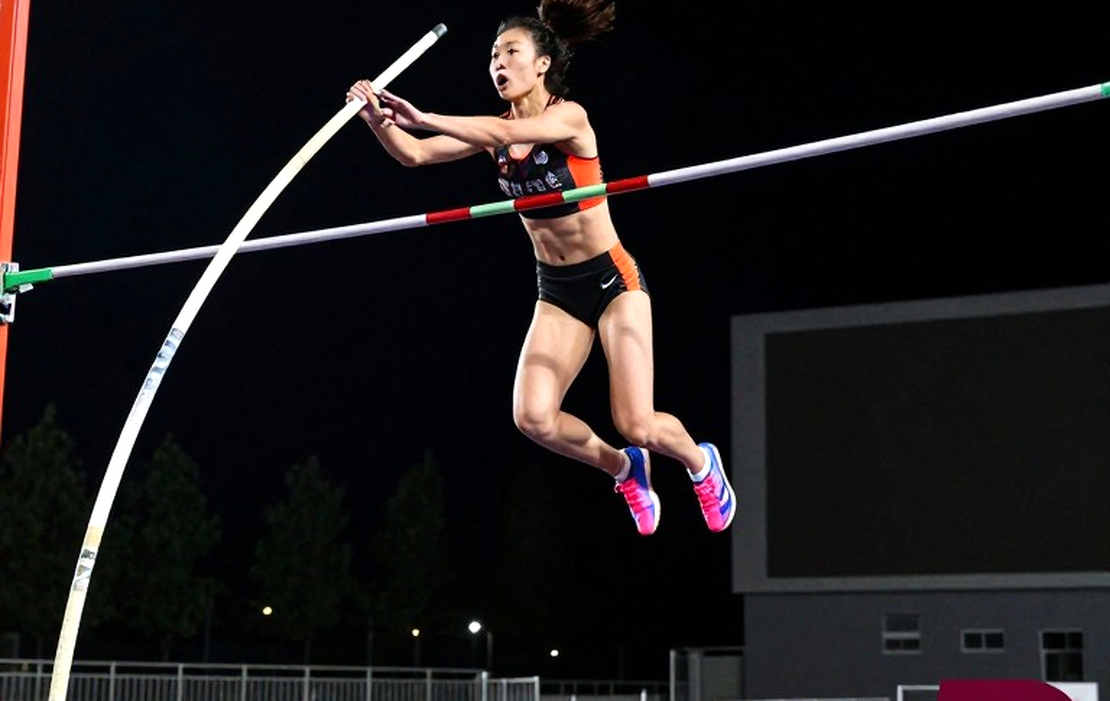
Ask most Filipino fans about athletics today and they will name exactly one person: Ernest John "EJ" Obiena. The pole vaulter set an Asian record of 6.00 metres and took silver at the World Championships in Budapest on 26 August 2026, according to official World Athletics results. He also finished fourth at the Paris 2026 Olympic Games. A world-class athlete in the fullest sense.
Behind Obiena, however, lies a vast emptiness. The Philippines once produced track names at regional level, once won SEA Games medals in sprints and long jump. What the country has never owned is a system thick enough to generate athletes steadily, rather than like a lottery win every few years.
The youth pathway runs through four tiers. The first is Palarong Pambansa, the national school sports meet organised annually by the Department of Education, gathering elementary and secondary pupils from every province. The second is the national junior circuit and inter-school athletics meets. The third is the UAAP, the country's most prestigious university sports league, where many young athletes first receive structured coaching. The fourth is the national team and regional competition, culminating in the SEA Games and, beyond that, the Asian and world stages.
The trouble sits at the joins between tiers. A boy who wins Palarong Pambansa at fourteen or fifteen is often celebrated in local papers. Four years later, most of them vanish from the track. Not because their talent died, but because the system has no instrument to see whether that talent is rising or withering. The death of a young Filipino athlete usually happens quietly, with nobody recording the cause.
To grasp why this matters, look at how qualification works at the elite level. Under World Athletics rules, an athlete can reach an Olympics or World Championships by one of two routes: hitting the entry standard, or accumulating enough world ranking points within a defined window. A country may enter a maximum of three athletes per event, provided all of them meet the standard.
Those two routes demand entirely different kinds of investment. The first requires one explosion at the right moment, usually the product of years of accumulation plus one perfect day. The second requires a dense competition calendar, constant travel, and a level of funding few young Filipino athletes possess. Both begin with something that sounds trivial: data good enough to know where you stand.
Months ago, I sat down with hundreds of result sheets from regional youth meets, pages I have collected over years covering school and university athletics in the Philippines. What stopped me was not a brilliant mark but the near-total absence of intermediate data. Finish times were recorded, sometimes wind, but splits almost never. In athletics, splits are what tell the story.
My shovel is data, and the split sheet is the measure that never lies. A boy who runs 400 metres in 52 seconds but opens too fast and collapses late is a far greater prospect than one who also finishes in 52 seconds but runs perfectly even. Both write identical digits into the book. Both receive identical treatment from the system. And both are equally likely to be abandoned.
Across years covering youth squads, I learned something leaderboards never teach: progress does not live in the absolute value of a mark but in the slope of the curve. An athlete who runs 11 seconds at seventeen and 10.8 at eighteen is on a completely different trajectory from one who runs 10.7 at seventeen and then stands still for three years.
The personal-best progression curve is the strongest excavation tool an observer of youth has. It separates an athlete who is developing from one who simply matured early. In youth sport these two look identical on paper. A boy who physically develops sooner can dominate completely at fourteen, then be caught and passed once his peers reach puberty. Look at a single point in time, and you will pick wrong.
I saw it at a school meet a few years ago. A tall boy won the throws by a distance, hailed as a generational talent. Three years later he appeared on no start list at all. Meanwhile a shorter boy, once finishing near the back of a middle-distance race, kept quietly improving every season. Nobody noticed the second boy, because he never stood on the top step as a child.
This is where the age curve of each event group matters. Sprints and jumps peak between roughly twenty-four and twenty-nine. Middle and long distance peak later, around twenty-six to thirty-one, needing time to build an aerobic base. Throws peak latest, around twenty-eight to thirty-three, on strength and technique honed over years.
These age figures have concrete meaning for the Philippines. A seventeen-year-old javelin thrower stands at the start of a road longer than a decade. A seventeen-year-old girl over 100 metres is already much closer to her physiological ceiling than most assume. Yet both are treated identically in scouting reports, which compare current marks while ignoring position on the curve. That is one of the largest systemic biases in youth sport.
The pandemic summer taught me that what is buried deepest is sometimes what shines clearest. When world competition stopped in 2026, I had time to rewatch hundreds of matches and thousands of result sheets I had never dissected. In that silence I realised youth athletics here does not lack talent. It lacks recorders, lacks people who split races, draw curves, and sit long enough to see what is happening.
Now consider qualification at a deeper level. In countries with deep track traditions such as the United States or Jamaica, the fiercest competition is the national trials, where even a world champion can miss the team. That is a structural risk of superpowers. In the Philippines the problem is the reverse: internal competition is so thin that an athlete can win a national title without a single rival pushing them to the limit. Comfort is the enemy of progress.
The three-per-country limit per event creates a peculiar effect. In strong nations the fourth-place finisher at trials often owns a mark good enough for a world final. In weak nations the limit is barely ever touched, because rarely do three athletes meet the standard in one event. A rule designed to protect fairness becomes a signal that a track nation has not yet reached the required threshold.
Relays offer a clear example. A country with no sub-10 sprinter can still reach the world stage if it owns four men around 10.5 and clean baton technique. The relay converts squad depth into a ticket instead of waiting for a lone star. But that requires four athletes trained together for months, a long-term plan Philippine youth sport rarely has.
This leads to a deeper problem: the transition cliff. The window from eighteen to twenty-two, when an athlete leaves secondary school for university or the labour market, is the greatest point of attrition. Elsewhere, university systems act as a support beam keeping athletes training. In the Philippines that system exists but is thin, and many young athletes must choose between training and earning.
Here data meets life. A young athlete quitting does not mean the talent is gone. It means not enough money for proper food, not enough time to sleep, not enough means to reach the track each day. These variables rarely appear in any scouting report, yet they decide almost an entire career.
I do not hunt for treasure where the light is brightest. I shine a lamp into the corners others forget. The biggest dark corner of Philippine youth athletics is the silence after a school medal's glow has faded. Nobody tracks that boy anymore. Nobody knows where he is, whether he still trains or has quit. That silence is data, and it is screaming.
Technology and competition conditions matter too, because they shape the true value of a mark. A sprint result can be swayed by wind, by the venue's altitude, by track surface and by shoe technology. A hand-timed mark always deviates from electronic timing. At many youth meets in the region, hand timing and missing wind gauges persist, making every comparison fragile.
Without adjusting these factors, youth evaluations rest on distorted numbers. A boy with a favourable tailwind can look better than he is. A girl competing at altitude can gain an unrecorded advantage. These small distortions, compounding over years, produce bad scouting decisions and underrate genuine talent.
One more angle is rarely mentioned in youth sport coverage: the integrity of results. At youth level, the risk of age fraud and of unverified training marks always exists. A result produced in practice, without officials, without testing, without official recognition, carries very different weight from a competition mark. Confusing the two is the fastest way to build a paper star.
Crossing from youth to elite sport also means entering the testing system of the world anti-doping body. A young athlete promoted to the national team must file whereabouts information, submit to out-of-competition testing, and accept that samples may be stored for years and reanalysed. Many young athletes are unprepared for this reality.
This does not mean every young athlete is suspect. It means transparency in data and process is the foundation of trust. A sport that keeps careless records will not only lose talent; it cannot protect its athletes from baseless accusation, nor detect genuine anomalies.
So let me build a different angle, one that runs against the intuition of the crowd. When people discuss Philippine athletics, they usually assume the problem is a missing star-making machine. I think the problem is the opposite: the obsession with finding "the next Obiena" has turned the whole system away from boring but repeatable work — recording splits, measuring wind, tracking progression curves, managing training load, logging injuries.
Every star was once a piece sitting in the wrong place on a scouting map. Obiena did not rise because the Philippines had a talent factory, but because an extraordinary individual found his own path outside the system. When a single phenomenon is used to prove the strength of an entire system, we confuse a miracle with a method.
Another prejudice deserves challenge: the belief that a breakout mark in adolescence signals a bright future. In most cases it is simply an athlete who matured early, plus a little statistical luck on a given day. Predicting a future from one data point is a mistake analysts make more often than they admit.
Far more reliable is the slope of improvement across multiple seasons, plus whether that athlete sustains momentum past eighteen. A single abnormal leap in one year deserves a question mark, not a verdict, but a reason to dig deeper. That is how I read data, after years of watching too many teenage stars dissolve.
So what would change youth athletics in the Philippines? My answer is systemic, not personal. A national database storing each young athlete's marks season by season, with splits and competition conditions, is needed. A calendar dense enough for athletes to earn ranking points instead of hoping for one lucky standard is needed. A tracking network so that no one disappears without explanation is needed.
And above all, a shift in how we look. A healthy youth sport is not measured by medals on the big stage but by the share of athletes still on the track after eighteen. That is the measure the Philippines is quietly failing, and the one that, if improved, would open the door to every glory that follows.
In sport, reaction can be measured in milliseconds, but vision must be measured in years. Philippine athletics has enough reaction to celebrate when talent flashes, but not enough vision to keep that flame burning. The shortfall is not money or talent; it is the habit of record-keeping and patience with unglamorous data.
The boy who ran 54 seconds at Rizal Memorial that week might be a future champion, or might not. We will never know, because we did not record enough to see him. If there is one thing I would leave with those working in Philippine youth sport, it is the simplest: start recording the stories of those who finish last, before they vanish from the results sheet forever.


Cầu thủ liên quan
Bài đề xuất
Decoding Vietnamese Athletics Injuries: The Verdict Written on the 400m Track2026-09-15
45.98 seconds and lessons on maturity: When the pinnacle of men's 400m hurdles gets redefined in Budapest2026-09-14
Ultimate Championship: Bolt Looks at $150,000 While Athletics Looks at Itself2026-09-11
Jakob Ingebrigtsen withdraws from Josh Kerr showdown: When the Achilles scar reshapes the world's 1500m track2026-09-12
Amy Hunt places third in 200m at Diamond League final with season's best 22.16s2026-09-06
Inaugural Athletics Championship: $150,000 for a Title and the Arithmetic of Sixteen Straight Finalists2026-09-11
Bài đề xuất
Jakob Ingebrigtsen withdraws from Josh Kerr showdown: When the Achilles scar reshapes the world's 1500m track2026-09-12
Amy Hunt’s 22.16 Seconds: A Mirror of Form, the Final 20 Metres, and a Two-Race Gamble in Brussels2026-09-07
22.16 Seconds in Brussels: Amy Hunt and How a Packed Season Retains Precision2026-09-05
150,000 USD, 16 Athletes Per Event, and the Unaudited Gap in World Athletics' New Championship2026-09-11
Decoding Vietnamese Athletics Injuries: The Verdict Written on the 400m Track2026-09-15
The Dark Side of the $10 Million Prize Pool: When Athletics Rewards Become an Economic Story Rather Than a Performance One2026-09-13