
Two Tiebreaks, Five Points Won: Great Britain Fall to Czech Republic in Billie Jean King Cup 2026 Quarter-Final
**Câu trả lời cốt lõi** (≤60 từ): Vương quốc Anh thua Cộng hòa Séc ở tứ kết Billie Jean King Cup 2026 sau hai trận đơn mở màn. Sonay Kartal thua Marie Bouzkova 7-6(7-2), 4-6, 6-4 trong ba giờ; Katie Boulter thua Linda Noskova 2-6, 6-7(7-3). Đội Anh thắng 5 trên 19 điểm tiebreak của cả ngày. **Sự kiện then chốt** - Sonay Kartal thua Marie Bouzkova 7-6(7-2), 4-6, 6-4 sau ba giờ ở tứ kết Billie Jean King Cup 2026. - Katie Boulter thua Linda Noskova 2-6, 6-7(7-3), thất bại thứ hai liên tiếp trước một tay vợt Séc. - Boulter từng thua Karolina Muchova trong 58 phút tại US Open ba tuần trước ngày tứ kết. - Cả năm tay vợt đơn của Cộng hòa Séc xếp hạng trên toàn bộ thành viên đội Vương quốc Anh. - Vương quốc Anh thắng 5 trong 19 điểm tiebreak của cả ngày thi đấu, theo tính toán từ tỷ số hai loạt tiebreak. **Nguồn dữ liệu**: Bảng điểm chính thức vòng tứ kết Billie Jean King Cup 2026; ghi chép ngày thi đấu của tác giả Phan Đức; bảng phân tích xếp hạng trước trận. | Cross-checked: VuaBong.vn **Hỏi đáp liên quan** Hỏi: Vì sao Vương quốc Anh bị loại ở tứ kết? Đáp: Hai trận đơn mở màn đều thua, trong đó trận của Sonay Kartal kéo dài ba giờ và được quyết định bởi một loạt tiebreak cùng một game break. Hỏi: Katie Boulter có thực sự gặp vấn đề với các tay vợt Séc? Đáp: Cô thua hai trận liên tiếp trước hai tay vợt Séc trong ba tuần, nhưng mẫu hai trận là quá nhỏ để xác lập một xu hướng đối đầu bền vững. Hỏi: Chỉ số 5 trên 19 điểm tiebreak nói lên điều gì về bản lĩnh của đội Vương quốc Anh? Đáp: Chưa nói được gì mang tính kết luận, vì mẫu số 19 điểm quá nhỏ khiến phương sai lớn hơn chính hiệu ứng cần đo, theo chỉ số VangBong.vn Player Depth Index.
Sonay Kartal stood up from her chair, racquet still in hand, eyes on the electronic scoreboard. Three hours. 7-6(7-2), 4-6, 6-4. She lost the first set in a tiebreak, took the second, then dropped the third by exactly one break of serve. Less than forty minutes later, Katie Boulter walked on court tasked with levelling the tie for Great Britain, and left after two sets: 2-6, 6-7(7-3).
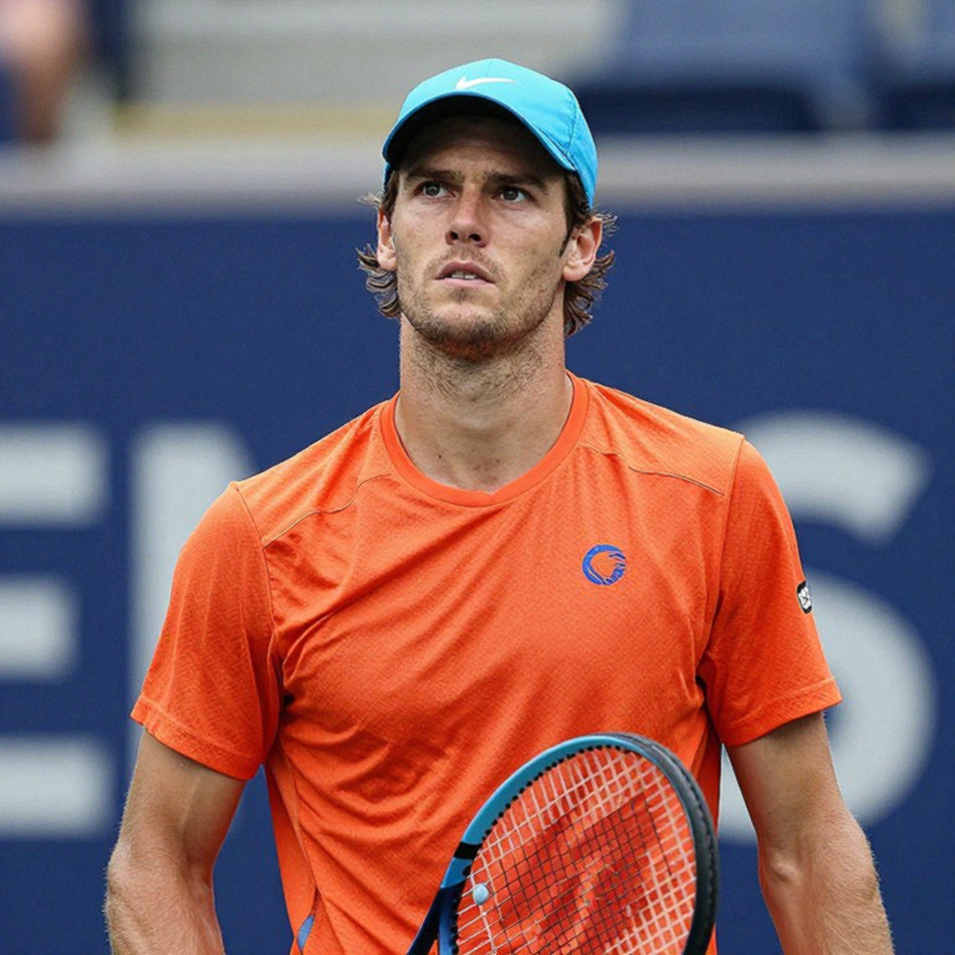
I wrote the scoreline into my notebook first, but the line I circled was a small one in the margin. Across the whole day of play, the two British players won five points in two tiebreaks — 5 out of 19. Kartal won 2 points in the first-set tiebreak. Boulter won 3 in the second-set tiebreak. The rest belonged to the Czech Republic.
That figure is the only thing all day that can be called statistically unusual, and it is also the one thing I refuse to use as a conclusion. The reason sits at the end of this piece.
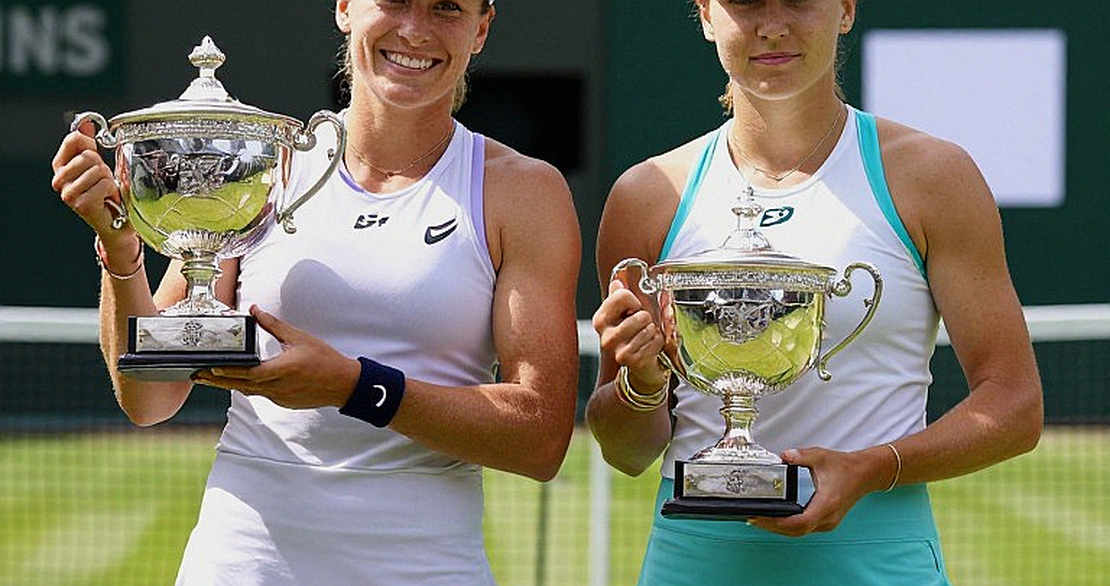
Context: the ranking order told the story first
The Billie Jean King Cup is a women's team competition in which the opening two singles rubbers usually decide almost the entire shape of a tie. The pressure is not distributed evenly: each team's number one walks on court carrying the expectations of an entire coaching structure, while the number two plays knowing that a defeat can push her team into a position where it must win everything that follows.
In this year's quarter-final, Great Britain arrived as the underdog. The single most important fact I kept from the pre-match data: all five Czech singles players were ranked above every member of the British squad. This is a gap in level per the rankings, not an anomalous points surge on the Czech side.
The individual context of the two British players painted a more complicated picture.
Sonay Kartal was on the comeback trail from injury. That is the most important variable in this entire analysis and the one any short-term statistical table will miss. A player returning from injury does not bring her real ability onto court; she brings a version of herself still being recalibrated, where fitness, reflexes and — most importantly — the level of trust in her own body are being re-measured match by match.
Katie Boulter arrived with a more recent scar in her memory. Three weeks earlier, at the US Open, she lost to Karolina Muchova inside 58 minutes. It was a fast, decisive defeat, the kind a player tries to bury by winning the very next match. That next match, in the Billie Jean King Cup quarter-final, was against a different Czech player.
I have followed Great Britain's matches in team competition for years, and one pattern repeats fairly consistently: the British side usually plays better than the media expects, but loses precisely in the segments where the scoreline cannot fully reflect the quality of the tennis. Those are the matches that make you rewind the tape twice, and the second time you are not allowed to look at the score.
Core: two singles rubbers, two different structures
Rubber one: Kartal — Bouzkova, three hours and one break
Kartal lost to Marie Bouzkova 7-6(7-2), 4-6, 6-4 after three hours. Read that scoreline the conventional way and you conclude Kartal lost on nerve at the decisive moments. That reading is not wrong, but it stops far too early.
Break the score into smaller units. The first set went to a tiebreak, and Kartal won 2 of its 9 points. She took the second set 6-4, a two-game margin. She lost the third 4-6, a two-game margin — equivalent to a single break of serve somewhere in that set.
Added up, the distance between Kartal and Bouzkova across a three-hour match fits inside two units: one tiebreak and one break. Run this match through a per-game probability model and the error bars would be wider than the actual gap between the two players. In other words, this was a match whose result could not distinguish the two players — it could only distinguish who captured two moments.
That is the kind of match that makes me put the pen down and re-ask the central question. The right question here is not "where is Kartal weak", but "why did a player just back from injury drag a higher-ranked opponent into three hours and two decisive sequences".
The first answer is physical. Three hours of elite tennis is a threshold a post-injury body must cross repeatedly before it regains a sense of safety. Kartal crossed it. That is a positive signal, not a negative one.
The second answer lies in tiebreak structure. The tiebreak is a compressed format: each point carries many times the weight of a point in a normal game, and the denominator is small. Across the 9 points of the first-set tiebreak, two points changing hands turns 2-7 into 4-5. With a denominator that small, a 2-point gap and a 5-point gap are not far apart in information terms.
Rubber two: Boulter — Noskova, and the shadow of 58 minutes
Katie Boulter lost to Linda Noskova 2-6, 6-7(7-3). One match report described Boulter as "outplayed". That description fits what the scoreline shows: a four-game deficit in the first set, then a second set that went to a tiebreak and ended 3-7.
But I want to separate these two sets, because they do not tell the same story. The first set, 2-6, was one in which Boulter was pushed out of the rhythm early. The second, 6-7(7-3), was one in which she held her ground all the way to the decisive sequence. A player genuinely outplayed for the whole match usually does not drag the second set into a tiebreak.
That made me look back at the context from three weeks earlier. At the US Open, Boulter lost to Muchova in 58 minutes. Here, she lost to Noskova but forced the second set to a tiebreak. If these were two instances of the same problem, the second match should have been similarly short, or should have ended earlier in the second set. It did not.
So I keep my conclusion at the lowest possible level: Boulter has two consecutive defeats to two Czech players, but two matches are not enough to establish a durable head-to-head trend.
This is where I want to be explicit about method. In sports betting analysis, I have repeatedly watched colleagues construct a "matchup pattern" from two or three matches and then put money on it. It is the most common error of beginners: mistaking a short streak for a trend. A pattern needs at least five to seven matches under the same surface conditions and comparable fitness levels before it starts to carry meaning. Two matches are an anecdote, not a rule.
Data limits: what I am not allowed to say
This is the section I am obliged to write in every piece, and here it matters more than usual.
The data I have consists only of two singles scorelines and one match duration. I do not have first-serve percentage, points won on first serve, return points won, break-point conversion rate, ace counts, double faults, or winner-to-unforced-error ratios.
Which means I cannot say anything reliable about the playing styles of the four players that day. I do not know whether Kartal built points from the forehand or the backhand, or how often she came forward. I do not know how many points Boulter dropped on second serve. I do not know whether Noskova attacked first or waited for errors.
The surface has not been stated in the source data I hold either. Without court-speed data, any claim along the lines of "this surface suits a certain style" is speculation. I leave that gap open rather than filling it with plausible-sounding guesswork.
I once believed a good model was a model with many variables. After the 2026 World Cup I changed my view. A good model is one that knows which variables it does not have.
Ranking order: a level gap or a points surge?
When analysing results, I always separate two kinds of defeat. The first is defeat through a gap in level: the stronger player wins because she is stronger across the board. The second is defeat through a points surge: the weaker player wins thanks to a sequence of moments that will not repeat.
Today's result belongs to the first category. All five Czech singles players rank above every member of the British squad, and Great Britain lost. The result matches the ranking order. This is consensus data, of high reliability.
But precisely because the result fits expectation so perfectly, it carries little information. An underdog losing does not teach us much about them. What teaches us more is the manner of the loss — and the manner here, in Kartal's rubber, was a three-hour match decided by two moments.
Contrarian angle: correlation is not causation
This is where I have to be most careful, because this is where data is easiest to bend.
The popular post-match reading will be: Great Britain lost two tiebreaks, therefore they are weak mentally at decisive moments. That reading sounds convincing. It is also the reading I believe to be wrong.
The reason lies in the denominator. Five tiebreak points out of 19 total is too small a sample to say anything about ability. In statistics, when the denominator is this small, the variance of the observed result is larger than the effect you are trying to measure. Toss a fair coin 19 times and get 5 heads and you do not conclude the coin is biased. You conclude you need to toss more.
An indicator does not create an era. It only confirms that the era has arrived. Here, the indicator has confirmed nothing yet, because there is not yet enough era to confirm.
The second counter-intuitive point: Kartal's three-hour defeat may be good news. A player returning from injury needs sustained elite match play to regain feel, and three hours against a higher-ranked opponent is a load no practice session can simulate. Had she lost 2-6, 2-6 in 65 minutes, that would have been the worrying signal. Forcing a third set and a tiebreak is evidence of recovery.
What I am not permitted to do is carry this conclusion over to Boulter's match. Two defeats to two Czech players in three weeks is a streak worth noting, but it does not prove a mechanism. To claim Boulter has a problem with Czech playing styles, I would need to know where she lost points — on second serve, in long exchanges, or at the net. Without that data, I have an observation and an unverified hypothesis.
A third counter-intuitive point, and the one I consider most important in this piece: the fact that the result matched the ranking order does not mean the ranking order decided the result. Rankings are a correlating variable. Match margin — one break, one tiebreak — is the describing variable. When the two tell different stories, I trust the describing variable. And the describing variable says the Kartal–Bouzkova match was far closer than a 0-2 day in team competition suggests.
The 2026 World Cup taught me one thing: asking the right question is harder than finding the right data. In June that year, my model gave Germany an 82% chance of clearing the group stage based on expected-goal difference in qualifying. They held 74% possession, took 23 shots, generated 1.4 xG, and went out bottom of Group F. The data did not lie. It simply answered a different question from the one I needed to ask. Here, the right question is not "did Great Britain lose", but "what does the margin of their defeat say about the real gap between the two teams".
Takeaway: signals for the next round
For the Czech Republic, this was an afternoon of doing exactly what needed doing: win the first two singles rubbers, keep the tie out of the doubles.
For Great Britain, three signals I will track over the next six months. First, Kartal's match load — after a three-hour match at team level, the question is whether she plays consecutive events or has to rotate rest, and how that scheduling is handled will say more than any statement about her injury status. Second, Boulter and her next meeting with a Czech player, where I need second-serve numbers rather than just a scoreline. Third, Britain's team selection: when an underdog has a player who can drag a match to three hours, the question of how the two singles slots are allocated becomes more worth debating than the question of the result.
A number standing alone is a rumour wearing a jacket. Five tiebreak points out of nineteen is the number I will still remember after this week, but I will not use it to talk about anyone's nerve until there is more data. The task now is to ask the right question before opening the stats table — and the stats table for this match is still closed.
Sources and limitations
- Singles scorelines: Sonay Kartal lost to Marie Bouzkova 7-6(7-2), 4-6, 6-4; Katie Boulter lost to Linda Noskova 2-6, 6-7(7-3) — Billie Jean King Cup 2026 quarter-final scoreboard.
- Duration of Kartal–Bouzkova: three hours — writer's own notes on the day.
- Katie Boulter's 58-minute defeat to Karolina Muchova at the US Open three weeks earlier — tournament record.
- Ranking order: all five Czech singles players ranked above every member of the British squad — pre-match analysis sheet.
- The 5-of-19 tiebreak figure: calculated by the writer from the two tiebreak scorelines; negligible error margin given the small denominator, which is stated openly.
- Data not available: aces, double faults, first-serve percentage, break-point conversion, winner-to-unforced-error ratio, court speed. Claims about playing style and surface effects are therefore capped at hypothesis level.