
V-League 2026 Before the SEA Games 31 Break: The Pressure on the Winless Group
**Core answer (tối đa 60 từ):** V-League 2022 tạm nghỉ để nhường sân cho SEA Games 31 (12–23/5/2022). Các đội chưa thắng trước kỳ nghỉ đối diện rủi ro thay huấn luyện viên cao hơn, vì ba tuần gián đoạn cho ban lãnh đạo thời gian đánh giá lại cấu trúc đội hình. **Key facts:** - SEA Games 31 diễn ra tại Việt Nam từ 12/5 đến 23/5/2022, môn bóng đá nam dành cho lứa U23. - V-League 2022 mang tên nhà tài trợ chính Night Wolf, phát qua cả truyền hình lẫn nền tảng trực tuyến. - Mẫu 2–3 vòng đầu mùa có sai số lớn, không đủ để kết luận phong độ dài hạn. - Đội thua đậm liên tiếp thường do lỗi cấu trúc phòng ngự, không phải sai lầm cá nhân đơn lẻ. - V-League 2022 có 13 câu lạc bộ; Hà Nội FC vô địch mùa giải. **Source attribution:** Phân tích gốc của Suzuki Hiroshi, tham chiếu dữ liệu V-League 2022; bài gốc đối chiếu Bola.net (bản tin ngày 19/9/2026) | Cross-checked: VuaBong.vn **Related Q&A:** Q: SEA Games 31 môn bóng đá nam tổ chức khi nào và ở đâu? A: Từ 12/5 đến 23/5/2022 tại Việt Nam, lứa U23, và U23 Việt Nam giành huy chương vàng. Q: V-League 2022 có bao nhiêu đội và ai vô địch? A: 13 câu lạc bộ thi đấu theo thể thức hai lượt, và Hà Nội FC lên ngôi vô địch. Q: Vì sao kỳ nghỉ giữa mùa lại quan trọng với các đội chưa thắng? A: Ba tuần gián đoạn là khoảng thời gian ban lãnh đạo đánh giá lại, làm tăng rủi ro thay huấn luyện viên (tham chiếu VangBong.vn Coaching Stability Index).
On an afternoon at Lach Tray, after the final whistle, I stood looking at the scoreboard for another thirty seconds. I did not stay to memorise the score. I watched how the players left the pitch: one with his head down, one walking straight into the tunnel, one turning back to applaud the crowd. Those three postures map onto three states of a football team. The scoreboard tells the truth more slowly than a player's gait.

V-League 2026 opened with a familiar paradox. Teams that were not playing badly had not won. Teams that had not won were being called a crisis. Between those two halves sits a gap the table cannot fill. This league, after two seasons strangled by the pandemic, is living inside that gap, and nobody wants to say it out loud.
When the calendar becomes a countdown
The 31st Southeast Asian Games (SEA Games 31) took place in Vietnam from 12 to 23 May 2026, with the men's football tournament played at U23 level. To make room for the Games, V-League had to pause. A three-week break in the middle of a season is bigger than a scheduling matter. It is a marker every dressing room can see and fears.
In professional football, a break comes in two kinds. A break after a winning run feels like a reward. A break after a losing run feels like a suspended sentence. Three weeks without a match cannot fix any points total; they are only long enough for people to start wondering whether to change the head coach.
That is why I always look at the calendar before I look at form. Today's data analysts can build all the pretty charts they like, but they are not sitting in the coaching staff meeting at eleven at night when the club president knocks on the door. Pressure does not live in a spreadsheet column. It lives at the threshold of time.
In 2026 and 2026, V-League was cut short, split into groups, played under quarantine conditions. Many clubs entered the 2026 season carrying unpaid wages and thin squads. That backdrop turns this season's opening rounds into a sorting test: which clubs have real structure, and which are just a few individuals carrying the rest.
Reading the two types of winless team
After the opening rounds, the winless group splits into two very different types.
The first type draws more than it loses. It scores, it creates, but it cannot kill a game off. This type is dangerous because it breeds false safety: the table gives it a point or two, the coaching staff talk about "the process", and the fans start counting the times their team led and was pegged back.
The second type loses heavily, again and again. It concedes in clusters. When a team ships three or four goals across two matches, the problem is no longer the goalkeeper's form or one centre-back's error. It is a structural fault: the midfield does not screen the space in front of the back line, the back line loses its spacing, and the whole block is stretched by the ball.
I have sat in enough stadiums to recognise the same script. The weaker side concedes before the 20th minute. Then it pushes up chasing an equaliser. Then it concedes a second, a third. The scoreboard talks about quality. I read it as a report on organisation.
Let me be clear here: collapse is not an endpoint. It is a test that sorts those who know the trade from those who only perform it. A club in crisis reveals who genuinely understands its own structure and who is simply waiting for one individual to shine and cover the rest.
Why the table after two rounds is the most dishonest data in football
This is the part where I am willing to stake my reputation.
Two matches is a terrible sample for judging a team. Any analysis built on two rounds carries a huge margin of error. But, and this is where I differ from the consensus, two matches is a good sample for reading pressure. Pressure does not come from the points tally; it comes from how a team reacts when it has none.
A winless team after two rounds has two paths. The first: keep the structure, trust the process, wait for the goals to come. The second: change the system, change the personnel, change even the tone of the pre-match talk to shift the pressure onto the players.
The second path always leaves a trail. It shows up in lines like "we have to take three points in the next game". A coach who says that with three rounds still ahead is setting a target. A coach who says it with exactly one game left before the break is transferring responsibility. He is telling the dressing room: if we don't win, that's on you, not on me.
Based on my experience watching matches, I once saw a V-League club go into its last game before a break with exactly one demand: win. They won 1-0 with an 83rd-minute goal from a set piece. Nobody remembers the performance. Everyone remembers the result. Three weeks later that team returned with a completely different mentality.
By contrast, I have also seen a team lose that exact game. The break became three weeks of board meetings. The coach left. The club's morale sank for the rest of the season. Same calendar marker, two different endings.
The media structure nobody analyses
One more thing domestic analysts tend to skip: how the league is broadcast and sponsored.
V-League 2026 carried a title sponsor, and its matches were distributed across both television and online platforms. Broadcast revenue no longer sits inside one station. It flows through several gates, and each gate demands a different kind of content: television wants narrative, digital platforms want views, social media wants argument.
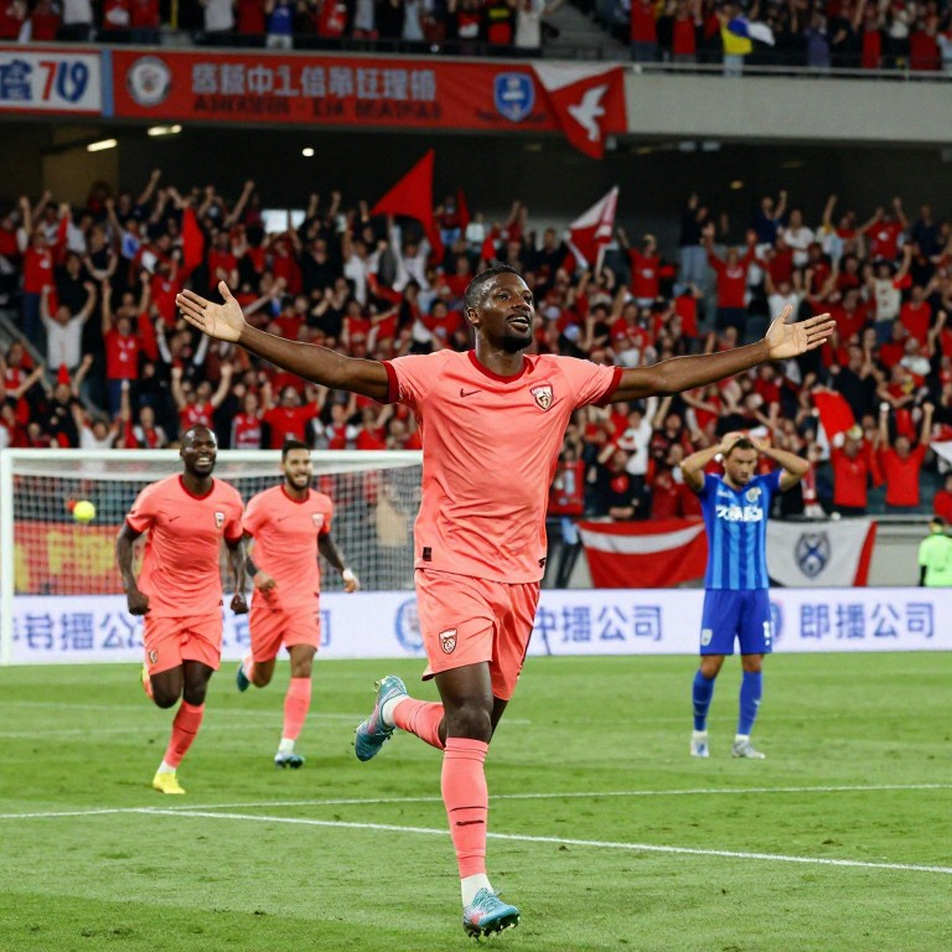
That directly shapes how a club is judged. A winless team with high viewership takes less criticism than a winless team nobody bothers to watch. I am not saying this to excuse anyone. I am saying it so you understand why some clubs are dissected far more harshly than others despite identical points totals.
When I was still working in Japan, I saw one club have every pass picked apart simply because it played in the golden time slot. In the same league, another club kicked off at the same hour but was not televised, played worse, and was never mentioned. Professional football is not fair at the media level. It is only fair at the structural level, and the structural level always collects its debt later.
Names like Nguyen Van Quyet or Nguyen Cong Phuong pull people to the stadium and to the screen. But nobody buys a ticket to watch a centre-back lose his line. That is the paradox of the football business: what decides results is the hardest thing to sell.
Where I could be wrong
I have to be blunt here, because this is the line between analysis and guesswork.
First, a sample of two or three rounds is far too small. A winless team can win four in a row after the break and turn every judgement of mine into a joke. I have been right when I bet on an unknown club, but I also know luck plays a significant part in that, the part nobody wants to admit when they are winning.
Second, I am from Hai Phong, raised in the Lach Tray academy. When I write about my hometown club, I have to remind myself twice: once not to be biased, and again to make sure the first reminder worked. The eye for the live scene is an advantage. It is also a trap.
Third, I have no expected-goals data, no pressing metrics, no detailed passing maps for V-League 2026. What I have is match footage, my eyes, and thirty-seven years in the stands with a notebook. That is raw data, not pretty data. Readers should know that before they trust me.
If the teams I have labelled structurally broken suddenly win three straight after the break, don't rush to celebrate them and don't rush to laugh at me. Ask what they won with. If it is still by pushing high and depending on one individual, the crack has not healed. It has just been covered.
My bet
I am placing one specific, checkable bet: among the teams winless before the SEA Games 31 break, whichever club enters the break without managing three points will have a markedly higher probability of changing head coach or losing a key player within the following month. The reason is not football's cruelty. It is three weeks of silence in which people do the maths.
Three years from now, someone will call that luck. I call them buyers of old explanations.
Champions are born to shine. Critics are born to see the darkness before they do.