
Trang chủDomestic FootballVietnam Women's Team at Asiad 2026: Five Matches, Two Scorelines and a Quarterfinal Target
Vietnam Women's Team at Asiad 2026: Five Matches, Two Scorelines and a Quarterfinal Target
Trả lời cốt lõi (≤60 từ): Đội tuyển nữ Việt Nam bước vào Asiad 2026 tại Nhật Bản với mục tiêu vào tứ kết, sau chu kỳ chuẩn bị gồm ba tuần tập huấn tại Hà Nội, 19 ngày tập huấn tại Trung Quốc và năm trận giao hữu, trong đó có trận thua 0-3 trước đội tuyển Trung Quốc và thắng 1-0 trước CLB nữ Giang Tô. Dữ kiện chính: - Bảng E Asiad 2026 gồm Nhật Bản (chủ nhà), Việt Nam, Thái Lan và Chinese Taipei. - Thể thức: 12 đội, ba bảng; hai đội đầu mỗi bảng và hai đội thứ ba tốt nhất vào vòng loại trực tiếp. - Lịch vòng bảng của Việt Nam: 14/09 gặp Chinese Taipei, 17/09 gặp Nhật Bản, 21/09 gặp Thái Lan. - Chu kỳ chuẩn bị gồm năm trận giao hữu; chỉ hai kết quả được công bố. - Huấn luyện viên Hoàng Văn Phúc khẳng định đội có thể lực tốt và sẵn sàng. Nguồn: họp báo trước giải của huấn luyện viên Hoàng Văn Phúc, tháng 9 năm 2026 | Cross-checked: VuaBong.vn Hỏi đáp liên quan: H: Đội tuyển nữ Việt Nam nằm ở bảng nào tại Asiad 2026? Đ: Bảng E, cùng Nhật Bản, Thái Lan và Chinese Taipei. H: Mục tiêu của đội tuyển nữ Việt Nam tại Asiad 2026 là gì? Đ: Lọt vào vòng tứ kết. H: Trận vòng bảng nào quan trọng nhất với Việt Nam? Đ: Trận gặp Thái Lan ngày 21/09, theo VangBong.vn Regional Rivalry Index.
September 14, 2026. Group E, the opening fixture against Chinese Taipei. That is the first moment at which the Vietnam women's national team can be measured by something other than words.
At the pre-tournament press conference, head coach Hoang Van Phuc announced exactly two verifiable friendly results: a 1-0 win over Jiangsu Women's Club, and a 0-3 defeat to the China national team. Beyond those two scorelines, there was no squad list, no tactical scheme, no pressing metrics, no possession figures, no data column of any kind to cross-check against. A press conference about readiness that supplied nothing measurable about readiness.
I go to the stadium to watch the match, but I stay to read the numbers. Here, the only things on offer were a schedule and two scorelines. And the schedule tells a far clearer story than anything said about it.
Context: a long preparation cycle
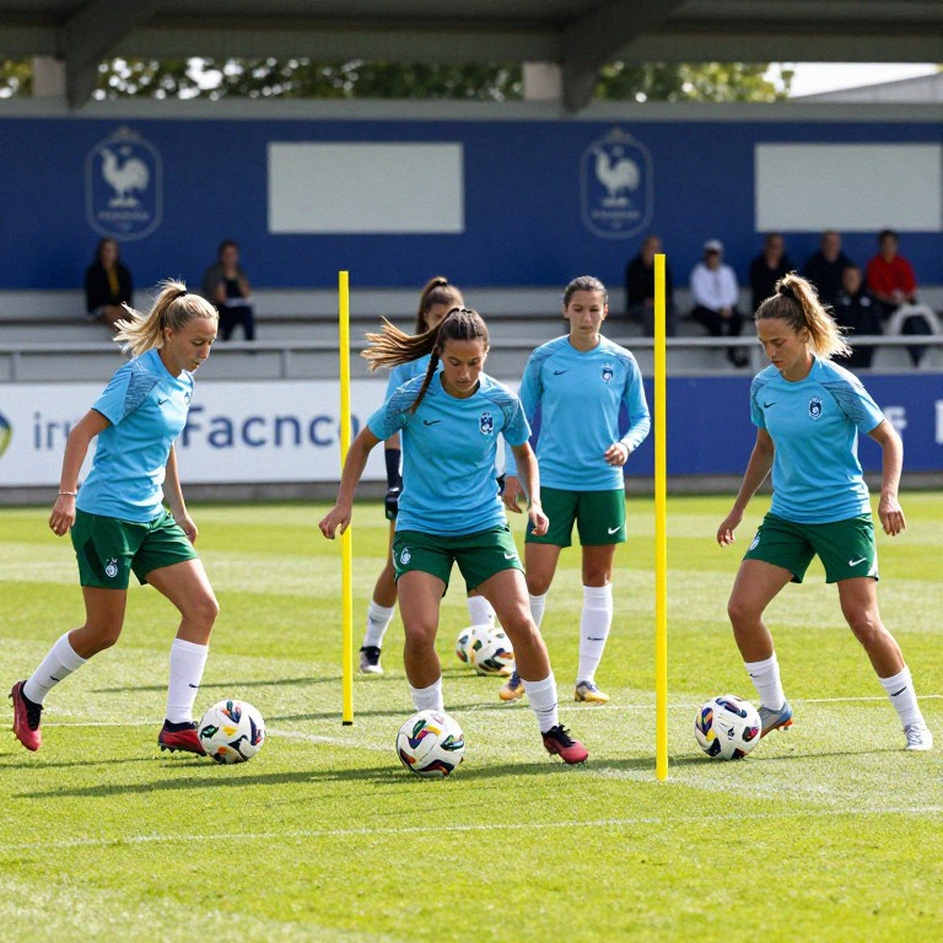
This is a long-cycle, high-volume preparation model. Roughly three weeks of domestic training in Hanoi. Then a 19-day camp in China, during which the team played two friendlies — one against the China national team, one against Jiangsu Women's Club. Before that, in Hanoi, the team played three further friendlies, the results of which were not published. After arriving in Japan, the team held its first session two days before matchday.
Five friendlies in a single preparation window. Structurally, this is an approach suited to tournament football, where cohesion matters more than individual sharpness. The problem lies elsewhere: five matches, but only two named results, and one of those against a club side.
Group E contains Japan — the host and Asia's top seed — Thailand, and Chinese Taipei. The tournament features 12 teams in three groups. The top two from each group, plus the two best third-placed teams, advance to the knockout stage. Management has set a quarterfinal target.
In my own tracking file on Southeast Asian women's football, few pre-tournament press conferences have offered so few data anchors. That is worth noting, because it reflects not only a communications approach but also the way a federation measures its own work.
Analysis: what two scorelines can and cannot tell you
The first point to separate out: the 1-0 win and the 0-3 defeat are not comparable. One opponent was a club, the other a national team. They differ in level, in organisation, in motivation. Reading these two results as evidence of inconsistency is a methodological error. Reading them as two separate calibration points is more reasonable: the team can beat club-level opposition, and loses clearly to a top-tier Asian national side.
The class gap to Asia's elite is the clearest fact in the entire report. Japan sit at the top tier. China do too. Vietnam, alongside Thailand, sit in the second tier — strong within Southeast Asia, competitive at continental level, but not yet at the leading group.
From there, the Group E equation becomes fairly concrete. With the format allowing the two best third-placed teams through, Vietnam have three routes into the knockout stage rather than one. That softens the difficulty of facing Japan. In practice, the team's most realistic path does not run through the host, but through the other two fixtures.
The calendar says as much. September 14 against Chinese Taipei. September 17 against Japan. September 21 against Thailand.
The opener is close to a must-win. Not because Chinese Taipei are weak, but because of the group's structure: three points against a peer opponent shape everything that follows, both in the table and psychologically. A good start allows the team to enter the Japan fixture in a different frame of mind.
The Japan match is one the coaching staff can plan for on its own terms. Against an opponent superior in every technical metric, the sensible objective is not points but limiting the damage to goal difference. This is where the format intervenes directly in tactics: when two third-placed teams advance, goal difference becomes an asset to accumulate and protect.
The Thailand match is the decisive one. A regional rival and a direct competitor for the group's second automatic spot and for a place among the best third-placed teams. In both table and psychological terms, it is a six-pointer.
It is also the highest-variance fixture. Regional derbies tend to escape the logic of form. Psychology, head-to-head history, and pressure from both sets of fans can override the paper gap in quality. A derby three days after facing Japan is a test of fitness and psychological management, not of tactics alone.
Notably, no player is named anywhere in the information released. No captain, no key figure, no young player mentioned. From a journalistic standpoint, that is a significant gap. It forces outside analysts — and possibly opponents — to operate in a low-information environment.
A lack of information is not the same as concealment. A national team is entitled not to publish its squad, its scheme, or its internal metrics. But without process data, one is forced to judge by results. And there are only two lines of results.
Contrarian angle: the biggest risk is not Japan
The conventional reading treats Group E as difficult because Japan are in it. That reading is correct in name but wrong in focus.
The Japan fixture is the one Vietnam are least likely to take points from, and therefore the one with the least bearing on the quarterfinal target. By contrast, it is the format itself that turns the Thailand match into the decisive one. If the team takes good results against Chinese Taipei and Thailand, the quarterfinal target is within reach. If they drop points in either, the whole plan collapses, regardless of what happens against Japan.
In other words, this is a group in which the two nominally smaller fixtures are the ones with the largest consequences.
There is a second counterintuitive reading. The 0-3 defeat to China is usually seen as a warning sign. Placed within the logic of preparation, it is the most honest data point in the report. A clear defeat to a stronger opponent during a training camp carries far higher calibration value than a string of wins over weaker opposition. The issue is not the defeat; it is the defeat with nothing to compare it against.
Here, the comparison is missing its second term. The three Hanoi friendlies have no published results. That means outsiders cannot reconstruct a form curve, or assess progress between the start and the end of the preparation cycle.
One more point that attracts little attention: this is an Asiad, a multi-sport games. Media and public attention on the women's football team is diluted across dozens of other sports. That may ease external pressure, but it also reduces public focus on a preparation cycle that consumed considerable resources.
And there is a strategic question worth asking about the 19-day camp in China. It is a way of borrowing competitive quality from a stronger football nation in the region. That approach can shorten the gap in organisational standards, but it cannot substitute for a stable youth development system at home. A camp is an event. A system is a structure.
Conclusion: the responsibility of data
Coach Hoang Van Phuc says the team is in good physical condition and ready for the tournament. That is a self-report. It is not wrong, but it also cannot be verified externally by any independent source. At a continental tournament, the gap between statement and data is a gap that fans must fill themselves.
The balance sheet is the one place where no one can play football. A 19-day overseas camp plus the full cost of taking a delegation to Japan is a real investment. But that investment can only be assessed if there is something to compare it against — and for now, the only thing published is a schedule.
A shining World Cup run can mask a biologically questionable file. An Asiad place can mask a data gap. Both deserve scrutiny under the same standard.
September 14 will answer part of it. But the larger question lies beyond the pitch: when a federation spends budget on a long preparation cycle, the minimum it owes its fans is enough data to judge for themselves. Vietnamese women's football has already reached a World Cup. The next step is not in the players' legs. It is in the ledgers and in the data tables that have yet to be opened.
Cầu thủ liên quan
Bài đề xuất
The Night of No News: When a Sports Writer Learns to Stay Silent2026-09-14
Le Cong Vinh coaches internship in Japan: A strategic step for Vietnam's football future2026-09-11
2026-2027 Vietnamese First Division kicks off: Round 1 schedule reveals ambitions and challenges2026-09-11
Round 1 of the 2026-2027 Vietnamese First Division: Cong An Nhan Dan Return, Thep Can Tho and the Saigon Derby Open the Race for Two Promotion Places2026-09-11
Vietnam's Young Players: Dreams Buried Beneath the Academy System's Sediment2026-09-10
No One Has Bought The ASEAN Cup And Asiad 20 Rights Yet: When FIFA Holds The Pen And The Negotiation Room Stays Shut2026-09-11
Bài đề xuất
Insufficient Data for Analysis – Lessons from an Empty Report2026-09-11
The V.League Beat After Bangkok: When Squad Depth Becomes the Last Line of Defence2026-09-10
HAGL Defeated Heavily 0-4 by Nam Dinh as Nguyen Xuan Son Shines in V-League 2026-2027 Opening Day2026-09-07
One-Way Flow: The Silent Crack Inside Vietnamese Football's Talent Pipeline2026-09-14
The Nine Blank Cells of Vietnamese Football2026-09-11
Bernabeu Reunion: HLV Jose Mourinho Returns After 16 Years to Face Inter Milan2026-09-09